
The first puppy I ever crate trained was a wiry terrier named Biscuit, and he screamed like a smoke alarm the moment the door clicked shut. His owners were ready to banish the crate to the garage, but I asked for one week and we rebuilt it: slower, kinder, and with more cheese.
By day seven, Biscuit was trotting into his crate on his own to nap.
If the idea of shutting a door on your puppy makes your stomach knot, good. It means you care. A crate done right isn't a cage; it's a den, a safe room your dog chooses to rest in. Here's how to get there in a week without the wailing.
Pick the right crate and the right spot
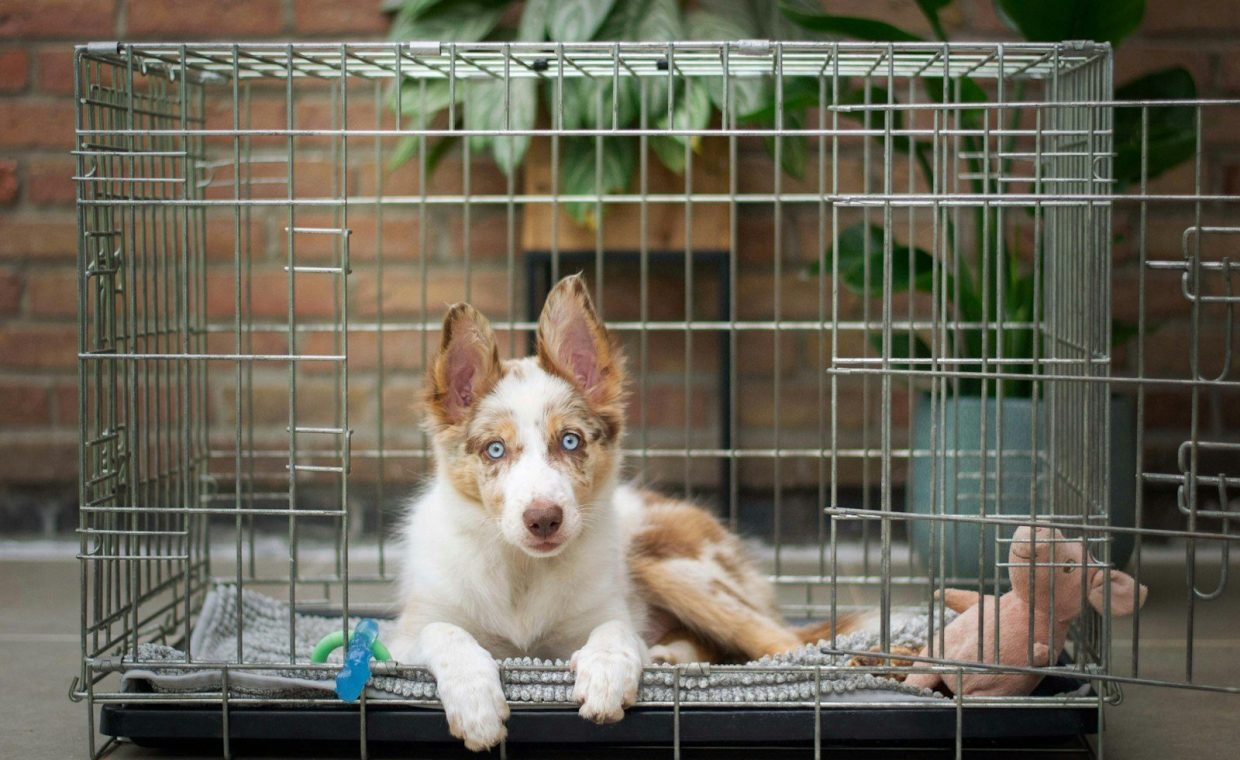
The crate should be just big enough for your puppy to stand, turn around, and stretch out. Give a young pup too much space and he'll potty in one corner and sleep in the other, which works against house training.
If you bought a roomy crate to grow into, use the divider panel to shrink the usable area for now, expanding it as your puppy fills out.
Place the crate where your family actually gathers, like a corner of the living room or kitchen, since puppies are social and isolation is half of what tips them into panic. Still deciding whether a crate or pen suits your home? My breakdown of whether a crate or a playpen fits a new puppy better can help you choose.
Make the crate the best place in the house
Day one has one job: convincing your puppy that good things happen near the crate. Leave the door open and propped so it can't swing shut and startle them.
Toss a few small treats just inside, then let your puppy wander in, grab them, and stroll back out. Don't close the door and don't say a word. You're paying for paws crossing that threshold.
Feed at least one meal with the bowl just inside the opening, and drop a favorite chew in there whenever you're nearby, so the crate becomes a vending machine rather than a trap.
Use higher-value food than your puppy's everyday kibble for crate work, such as tiny pieces of plain cooked chicken or a few licks of canned pumpkin. The crate should always pay better than anywhere else in the house.
Add a cue and a closed door, for one second
Now we name the behavior. As your puppy steps inside for a treat, say a cheerful cue word (I use "kennel") light and singsong.
Once your pup is heading in willingly, push the door closed for a single second, feed a treat through the bars, then open it: one second, then two, then five. You're building a bank account of calm, closed-door moments.
If your puppy starts pawing or fussing, you moved too fast, so back up to a duration that was easy and rebuild from there. Rushing this step is the most common mistake I see, and it creates the very screaming we're avoiding.
Build duration while you stay in the room
By midweek, your puppy should walk in on cue and settle calmly with the door shut for short stretches, so now we stretch that time while you stay put.
Hand over a long-lasting chew or a food-stuffed toy, close the door, and sit a few feet away scrolling your phone. Aim for five minutes, then ten, then twenty. A puppy chewing happily behind a shut door is the goal.
Let your puppy out only when they're calm and quiet, never mid-whine, because releasing on a quiet moment teaches a quiet puppy; dogs repeat whatever gets the door open.
A puppy who can settle alone in a crate learns to self-soothe, and that hard-won calm carries into the rest of life. The same emotional control is what you'll lean on later when you tackle the focus problems behind why so many dogs stop listening the moment there are distractions outside.
Practice short absences and leaving the room
Here's where patience pays off most. With your puppy settled and chewing, stand up, walk to the kitchen, and come back before any fussing starts, building it the way you built duration: seconds, then minutes.
Vary your pattern so leaving stays boring: sometimes return in ten seconds, sometimes putter in the next room for three minutes. If you only ever leave for long stretches, your puppy learns that you vanishing means a lonely wait.
Keep your comings and goings low-key, with no emotional goodbyes and no big reunions, because a puppy reads your energy and a calm exit tells them this is all perfectly normal.
Nighttime and the first real alone-time
By day seven you're ready for the two moments that matter most: sleeping overnight and being left alone for an errand.
For night one, position the crate in or near your bedroom so your puppy can hear and smell you, because that closeness quiets crying better than any gadget on the market. As your pup settles over the next few weeks, you can shift it to a permanent spot.
For daytime departures, tire your puppy out first with play and a potty break, then offer a stuffed chew and leave calmly, keeping early absences short because young bladders fill fast. Burning off energy beforehand is why I'm so fussy about good walks, the same logic that runs through my list of the dog-walking mistakes that quietly make every walk harder.
Frantic clawing, drooling, broken teeth, or soiling in a previously clean crate can signal genuine separation anxiety rather than ordinary adjustment. That's a different problem, so loop in your veterinarian or a qualified behavior professional rather than pushing through with more crate time.
Common slip-ups that stall the whole plan
A handful of habits sink more crate-training efforts than anything else, and the biggest is using the crate as punishment. If your puppy goes there after chewing the rug, it becomes a penalty box rather than a safe den, and dogs avoid penalty boxes.
Another is confining a puppy far too long; a crate is a bedroom, not a holding cell. If your day means eight hours away, arrange a midday walk, a sitter, or a playpen.
The last one is quitting after a hard night. Progress with puppies is rarely a straight line, so one rough evening can't erase a week of good work. Reset and pick up where it was easy.
Day 1: open-door treats and meals. Day 2: add a cue and a one-second door. Days 3-4: build duration while you stay. Days 5-6: practice short absences. Day 7: nighttime and real alone-time. Go slower any time your puppy struggles, because the calendar is a guide, not a rule.
Is it cruel to crate a puppy at night?
No, not when it's done gently. Dogs are den animals, and most learn to find a properly sized crate restful and safe. The cruelty isn't the crate itself. It's forcing a frightened puppy in too fast or leaving them confined far too long.
How long can my puppy stay in the crate?
A rough guide is one hour per month of age during the day, up to a few hours, since young bladders fill quickly. Nighttime stretches a bit longer as they mature. For your individual puppy's needs and any health concerns, check with your veterinarian.
What if my puppy cries every single time?
Persistent crying usually means the steps moved faster than your puppy was ready for, so back up to a duration that felt easy and rebuild slowly. If the distress is frantic or escalating rather than fading, talk with your vet or a behavior professional to rule out separation anxiety.
Take your time, keep the cheese coming, and trust the process even when a night goes sideways. I've watched plenty of skeptical owners go from dreading the crate to having a puppy who naps in it by choice, and your week-one self won't believe how quickly the den becomes the calmest spot in your home.