

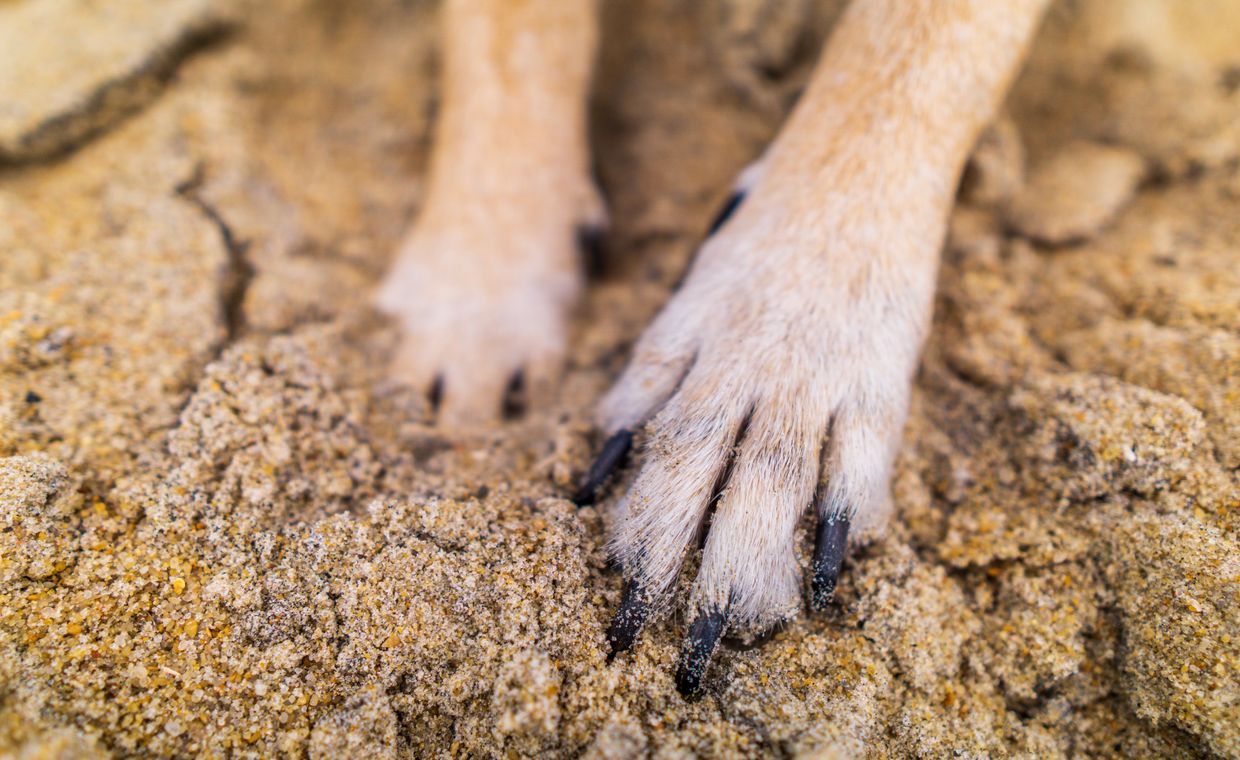
Last spring a client sent me a photo of her backyard that looked like a golf course after a mortar attack. Six fresh craters near the fence line, one deep enough to lose a tennis ball in, and a very pleased-looking terrier mix sitting in the middle of it all. She wanted to know what was wrong with her dog.
Nothing was wrong with her dog. That was the whole point. Digging is one of the most normal things a dog can do, which is exactly why yelling at the hole rarely fixes anything.
The good news is that digging is also one of the easier behaviors to change, as long as you treat the cause instead of the crater. Here is how I actually do it, force-free.
Figure Out Why Your Dog Is Digging
Dogs dig for reasons that make perfect sense to them. Before you can redirect the habit, you need to know which reason you are dealing with, because the fix for a bored dog looks nothing like the fix for an overheated one.
Watch when and where the digging happens. A dog cooling off will dig shallow pits in shade, often flopping down in them right after. A dog hunting will dig with focus at one specific spot, usually where a mole or chipmunk lives.
A bored or under-exercised dog tends to dig anywhere, often near the fence, and usually when left alone. Escape diggers work the perimeter with real determination. Each of these tells you something different.
| Digging Style | Likely Cause | Where You See It | First Move |
|---|---|---|---|
| Shallow pits in shade | Cooling off | Under trees, near the house | Add shade and water |
| Focused at one spot | Prey drive, chasing critters | Over burrows and root lines | Block access, manage pests humanely |
| Random holes when alone | Boredom, excess energy | Anywhere, often the fence | More exercise and enrichment |
| Perimeter trenching | Escape or separation stress | Along fences and gates | Supervise, address the anxiety |
| Frantic burying | Instinct to stash | Soft soil, garden beds | Give a legal dig zone |
Once you know the why, everything downstream gets easier. You stop guessing and start solving the right problem.
Meet the Energy Need First
Most of the random, fence-line digging I get called about traces back to a simple truth: the dog has more gas in the tank than the day is burning off. Digging is a wonderful outlet for that leftover energy, and dogs know it.
A tired dog digs less. That is not a slogan, it is just how bodies work. Before we talk about any training, I want to know the dog is getting genuine physical and mental work, matched to their breed and age.
If you are not sure what a fair daily amount looks like, our guide on how much exercise a dog needs daily is a good gut check. High-drive breeds especially need more than a stroll around the block.
Quick enrichment that beats digging: a stuffed frozen food toy, a snuffle mat scattered with kibble in the yard, or a five-minute training game before you leave the house. Ten minutes of nose work can tire a dog more than a half-hour walk.
Build a Legal Dig Zone
Here is the part people resist and then thank me for later. You are not going to delete the urge to dig, so give it an address. A dedicated dig zone lets your dog do the thing they love without wrecking your lawn.
Take a corner of the yard, a child's sandbox, or a cheap plastic pool, and fill it with loose sand or soft soil. This is the yes spot. Everything else becomes the no spot by comparison.
To teach it, bury a few treats or a favorite toy just under the surface while your dog watches. When they dig it out, throw a party. Praise, treats, the whole show. Repeat until they head to that spot on their own.
Make the legal zone the most rewarding patch of dirt in the yard, and make the rest boring. Dogs repeat what pays off, so stack the payoff where you want the behavior.
This whole approach leans on the same idea behind positive reinforcement basics for owners: reward the behavior you want, and it grows. Punishing the hole after the fact just teaches your dog to dig when you are not looking.
Make the Off-Limits Spots Unrewarding
While you build up the yes spot, you also want to gently take the fun out of the favorite forbidden craters. Not with punishment, just with a little friction and management.
Fill existing holes and lay something over them the dog dislikes stepping on. Chicken wire pinned flat under a thin layer of soil works well, since paws hit the mesh and the digging stops being satisfying. Large flat rocks or landscape fabric help too.
Some dogs back off if you place a bit of their own poop in a repeat hole, which sounds gross but often works. Avoid cayenne, vinegar, or citrus sprays sold as deterrents. They can irritate eyes and noses, and they are not force-free.
Never fill a hole while your dog watches and then scold them into it, and never bury a dog's nose in dirt as correction. That kind of punishment damages trust and tends to create new problems like fear or avoidance rather than fixing the digging.
Handle the Fence-Line Escape Digger
Perimeter digging deserves its own plan because the stakes are higher. A dog trying to tunnel out is telling you something is missing inside the yard, or something outside is too tempting to ignore.
Physically, you can bury an L-shaped footer of fencing along the base, or line the fence bottom with pavers or large rocks. That buys you safety while you work on the underlying motivation.
Often the motivation is understimulation or stress at being left alone. If your dog also reacts to every passing sound, the same restlessness may show up elsewhere, which is why owners of fence-diggers sometimes also ask why their dog barks at everything. Both behaviors can share a root of too much energy and too little to do.
Manage the Environment While You Train
Training takes weeks, not minutes, so set your dog up to succeed in the meantime. Supervision is your best tool here. A dog who never gets to practice digging in the wrong spot forgets the habit faster.
When you cannot watch, shorten the opportunity. Use a smaller area, come outside with them, or bring them in. Every crater they dig unsupervised is a rep that reinforces the behavior you are trying to fade.
The plan in one breath: meet the energy need, build a legal dig zone and pay it well, make the forbidden spots boring, secure the fence line if escape is the goal, and supervise so bad reps do not pile up. Consistency does the rest.
How Long Until It Works
Most dogs show real progress within two to four weeks if you stay consistent. Puppies and high-drive breeds may take longer, and that is normal. The goal is steady improvement, not overnight perfection.
If digging suddenly spikes with no clear cause, or comes with pacing, weight loss, or other changes, check in with your vet. Occasionally a behavior shift points to a health or stress issue worth ruling out.
Will my dog grow out of digging on their own?
Some puppies dig less as they mature, but most dogs do not simply stop, especially breeds bred to dig. Redirecting the behavior to a legal spot is far more reliable than waiting it out.
Is it ever okay to just let my dog dig?
Absolutely, as long as it happens in a dedicated dig zone where nothing gets damaged. Digging is healthy enrichment. The goal is location, not elimination.
My dog only digs when I leave. What does that mean?
Digging that happens only during alone time often signals boredom or separation stress. Boost exercise and enrichment first, and if it continues or worsens, talk with a vet or a force-free trainer about separation anxiety.
Digging is not defiance, and your dog is not broken. They are just being a dog with an itch to scratch and a yard full of soft dirt. Give that urge a fair outlet, burn off the extra energy, and stay patient through the messy middle. Your lawn and your dog can absolutely coexist.