
The night before I brought my first dog home, I had a cart online stuffed with roughly $400 of stuff. A self-cleaning water fountain. A raincoat. A "calming" plush donut bed the size of a kiddie pool. About half of it never got used, and the donut bed became a place to dump laundry.
So I want to save you that mistake. I have since fostered and gear-tested for years, and the truth is your dog needs surprisingly little in week one. The trick is buying the right boring things first and letting the fun gadgets wait.
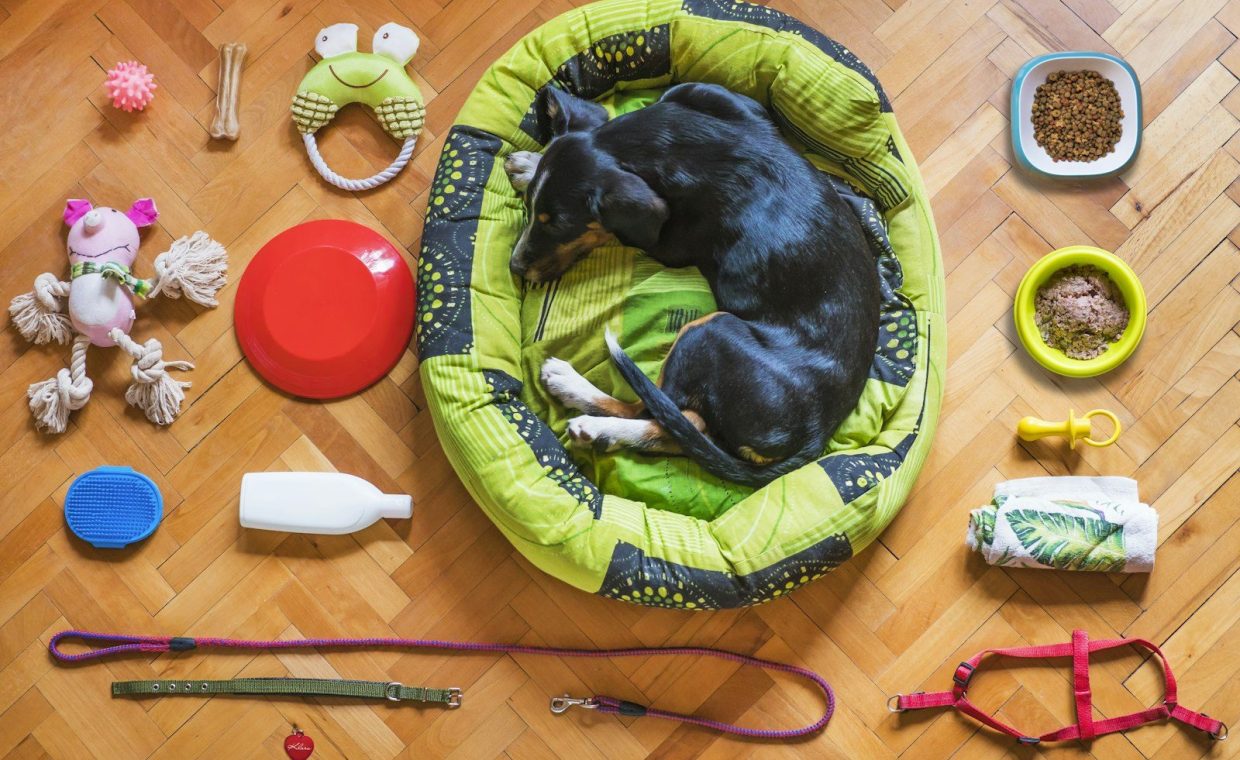
Here are the twelve items I would buy before anything else, roughly in the order they actually earn their keep.
1. A flat collar with an ID tag
This is the cheapest item on the list and the one I would never skip. Before your dog walks through your door, they should be wearing a collar with a tag that has your phone number engraved on it.
A microchip is great, but a stranger who finds your loose dog cannot scan a chip from their driveway. They can read a tag. Spend the $10, get it engraved the same day, and clip it on immediately.
A collar fits right when you can slide two fingers flat underneath it. Tighter and it rubs; looser and a panicked dog backs straight out of it.
2. A sturdy 6-foot leash (skip the retractable)
A plain 6-foot nylon or leather leash costs around $15 and will outlast three of the trendy alternatives. It gives you enough slack for sniffing and enough control for crossing a road.
I know the retractable ones look convenient. They also teach dogs to pull, snap back painfully if dropped, and give you almost no control in the one moment you need it. Save it for later, if ever.
3. A properly fitted harness
For most dogs, especially anything that pulls or has a delicate windpipe, a harness spreads pressure across the chest instead of the throat. Front-clip styles also gently discourage pulling without any yanking on your part.
Measure your dog's chest girth before you order, because "medium" means something different on every brand. A harness that pinches behind the legs will get left in the closet, and then we are back to the collar doing all the work.
4. Food and water bowls
Stainless steel is my default. It is cheap, nearly indestructible, dishwasher-safe, and does not scratch up the way plastic does and harbor bacteria in the grooves.
If your dog inhales meals like they are being timed, a slow-feeder bowl is worth the few extra dollars. It turns a ten-second gulp into a few minutes of work, which is gentler on the stomach.
5. The food your dog is already eating
This one surprises people. On day one, buy the exact food your breeder, shelter, or previous owner was feeding, even if you plan to switch later.
A new home is already a big change. Swapping food cold turkey on top of that is a reliable recipe for an upset stomach and a messy first week. If you do change brands, mix the new in gradually over a week or so.
A little soft stool during the transition is common. But vomiting that won't stop, bloody diarrhea, lethargy, or a hard, swollen belly are not "wait and see" signs. Contact your veterinarian, and treat a tight, distended abdomen as a possible emergency.
6. A crate that fits the adult dog
A crate is not a cage; used kindly, it is the single most useful tool for housetraining and for giving a nervous dog a den of their own. Buy one sized for the adult dog and use a divider while a puppy grows.
The crate becomes your best friend during housetraining, because dogs naturally avoid soiling where they sleep. It pairs directly with the routine I walk through in my guide on house training a puppy the reliable way, where the crate does most of the heavy lifting.
7. An enzymatic cleaner (you will need it)
There will be accidents. Plan for them by keeping an enzymatic cleaner under the sink before the first puddle appears, not after.
Regular cleaners mask odors to your nose but leave scent markers your dog can still smell, which quietly invites a repeat. Enzymatic formulas actually break the mess down. This is a roughly $10 purchase that saves your floors and your sanity.
8. Poop bags and a holder
Unglamorous, non-negotiable. A roll of bags clipped to the leash means you are never that person patting your pockets in someone's front yard.
Buy in bulk; you will go through them faster than you expect. I like the ones on a small dispenser that clips to the leash, so the bags travel with the dog instead of living forgotten in a drawer.
9. A comfortable, washable bed
Skip the designer bed for now. Your dog does not care about the velvet trim, and a brand-new puppy may well chew or pee on whatever you buy first.
Get something machine-washable and appropriately sized, ideally with a removable cover. Once you know your dog's sleep style, whether they sprawl or curl into a tight donut, you can upgrade. Plenty of new dogs prefer to be near you anyway, which ties into why your dog follows you everywhere in those first weeks.
10. A couple of safe chew toys
Dogs explore with their mouths, and a bored dog will pick a target for you, usually a table leg or your nicest shoe. Give them a legal outlet instead.
Start with two or three durable chews sized for your dog, and check them periodically for chunks that could break off and be swallowed. A good chew also doubles as a stress reliever during the unsettled early days.
A toy small enough to swallow is a choking hazard, and worn-down pieces should be tossed. Supervise new chews, and if you ever suspect your dog swallowed something they shouldn't have, call your vet rather than waiting it out.
11. Basic grooming kit
You do not need a salon setup on day one. A brush suited to your dog's coat, dog-specific shampoo, and a pair of nail clippers or a grinder cover the essentials.
I am a grooming-gear nerd, so trust me here: human shampoo is the wrong pH for dog skin and dulls the coat over time. The single best early habit is touching the paws daily so nail trims never become a wrestling match.
12. A baby gate or two
The least dog-looking item on the list, and one of the most useful. A baby gate lets you manage space without slamming doors, keeping a new dog out of the stairs, the kitchen, or the cat's territory.
Controlled introductions matter most if you already have a pet at home. Gates let everyone see and smell each other safely, which is exactly the slow approach I recommend for introducing a new dog to your resident dog calmly before they ever share a room unsupervised.
The boring trio of collar, ID tag, and leash protects your dog from day one. The crate, enzymatic cleaner, and current food carry you through the messy first week. Everything fancier can wait until you actually know the dog in front of you.
What you can safely skip in week one
Plenty of products are pitched as essential and are really just nice-to-have. Here is how a few of the popular ones stack up against the basics above.
| Item | Buy now or wait? | Why |
|---|---|---|
| Collar, tag, leash | Now | Safety and identification from minute one. |
| Crate and washable bed | Now | Housetraining and a secure resting spot. |
| Designer orthopedic bed | Wait | May get chewed; buy once you know their sleep style. |
| Automatic water fountain | Wait | A plain bowl works; fountains add cleaning, not necessity. |
| Full wardrobe of outfits | Wait | A coat helps thin-coated dogs in cold; the rest is for photos. |
How much should I budget for the essentials?
You can cover the genuine must-haves for roughly $150 to $250, depending on your dog's size and how fancy you go on the crate. The collar, tag, and leash together run under $40, which is the part I would never economize on.
Do I really need a crate if my dog seems calm?
Even mellow dogs benefit from a den of their own, and the crate makes housetraining dramatically easier. Used as a positive space rather than a punishment, most dogs come to like it. If yours is older and already house-trained, a gated room can serve a similar purpose.
Should I buy toys before I know my dog's chewing style?
Start with just two or three durable chews rather than a whole bin. Watch how aggressively your dog chews, then buy more of whatever survives. Always pick a size too big to swallow, and retire any toy that breaks into small pieces.
Bring home the boring stuff first, and the fun shopping will still be there next month. Those early weeks are less about the perfect gear and more about routine, patience, and a few safe basics. Get the safety items right, keep your vet's number handy for anything health-related, and let your actual dog tell you what else they need.