
The first time I watched two dogs meet badly, it happened in a hallway. The resident dog was wedged into a corner, the new dog was leaning over him, and the owner was apologizing to both of them at once. Nobody got hurt that day, but it took weeks to repair the relationship. Almost all of it could have been skipped.
Here is the thing I tell every owner who walks onto my training floor with a second dog on the way: the meeting is not one big moment. It's a series of small, boring, well-paced moments, and boring is exactly what you want. A flat, uneventful first encounter is a win.
This is the same neutral-territory method I use with clients bringing a newcomer into a one-dog house. Work through the steps in order, give each one a day or two, and don't rush to the part where everyone naps together on the couch.
Set the Stage Before Anyone Meets
Preparation happens before the new dog is anywhere near your home. Pick up the things your resident dog feels strongly about: favorite chews, the prized bed, food bowls, that one squeaky toy he guards. Out of sight for the first week keeps small disputes from becoming the relationship's first impression.
Set up a separate space for the newcomer with its own bed, water, and bowls, ideally behind a baby gate or in a spare room. Both dogs need somewhere to exist without the other in their face.
Walk your resident dog hard the morning of the introduction. A dog who has already burned off energy meets a stranger with a much longer fuse. Tired is calm.
Meet on Neutral Ground, Not at the Front Door
Never let the first meeting happen inside your house or yard. Your resident dog owns that territory, and walking a stranger straight into it stacks the deck against you. Choose a spot neither dog considers theirs: a quiet park, an empty lot, a wide street.
You'll want two handlers, one per dog, each on a loose leash. Start the dogs maybe thirty feet apart and simply walk in the same direction, parallel, with that gap between them. No greeting yet. You're just letting them exist near each other while moving.
Watch the body language. Loose, wiggly bodies and easy sniffing of the ground are good. A frozen stare, a stiff tail held high, or a dog that won't take a treat tells you to add distance and slow down.
Close the Gap Slowly
If both dogs stay loose, shrink the distance a few feet at a time over several minutes. Keep walking. Movement gives nervous dogs a job and keeps them from locking onto each other.
When they're close enough, allow a brief sniff, a few seconds, then cheerfully call both away and keep moving. That short-and-sweet greeting prevents the slow-motion tension that builds when two dogs stand nose to nose for too long. A relaxed, curious sniff is one of the small everyday signs that things are going well, and learning to read those moments matters as much here as it does when you're checking the everyday signals that tell you your dog is genuinely content.
Stiffness, a hard stare, raised hackles, lifted lip, or a tail clamped tight. Any of these means create space and reset. Pushing through warning signs is how good introductions turn into fights.
Walk Home Together
Once the parallel walk is going smoothly and greetings stay loose, walk both dogs home together, still on leash, still with a little space between them. Arriving as a loose pack beats one dog watching the other invade the doorway.
Bring them into the yard or a roomy area first, not a tight hallway. Let them drift around the space, leashes dragging if it's safe, while you stay quiet and boring. Your calm tells your resident dog there's nothing here worth worrying about.
Manage the First Days Inside
Indoors is where most owners relax too early. Keep the gear from Step 1 put away, feed the dogs in separate rooms, and don't leave them alone together yet. Supervise every interaction for at least the first week or two.
Give your resident dog the same attention and routine he always had. New dogs are exciting, and it's easy to fuss over the newcomer while the original feels shoved aside. If your dog has always been a velcro shadow, that bond doesn't vanish just because there's a second dog. And if you're curious about that closeness, it's worth reading why some dogs trail their person from room to room.
If you see repeated growling that doesn't settle, snapping, or one dog relentlessly cornering the other, separate them and call a qualified trainer or behaviorist. Real conflict between dogs isn't something to wait out, and it isn't a sign you failed.
Build Good Associations and Shared Wins
Now you're shaping a relationship, not just preventing a fight. Feed treats when they're calm near each other. Take them on walks side by side, because a shared walk gives two dogs a common job and almost always lowers tension.
Short, upbeat training sessions help too. Asking both dogs to sit for a treat, taking turns, teaches them that the other dog's presence predicts good things. If you want easy structure for those sessions, the routines in my roundup of quick tricks you can teach in a single weekend double nicely as calm, side-by-side practice.
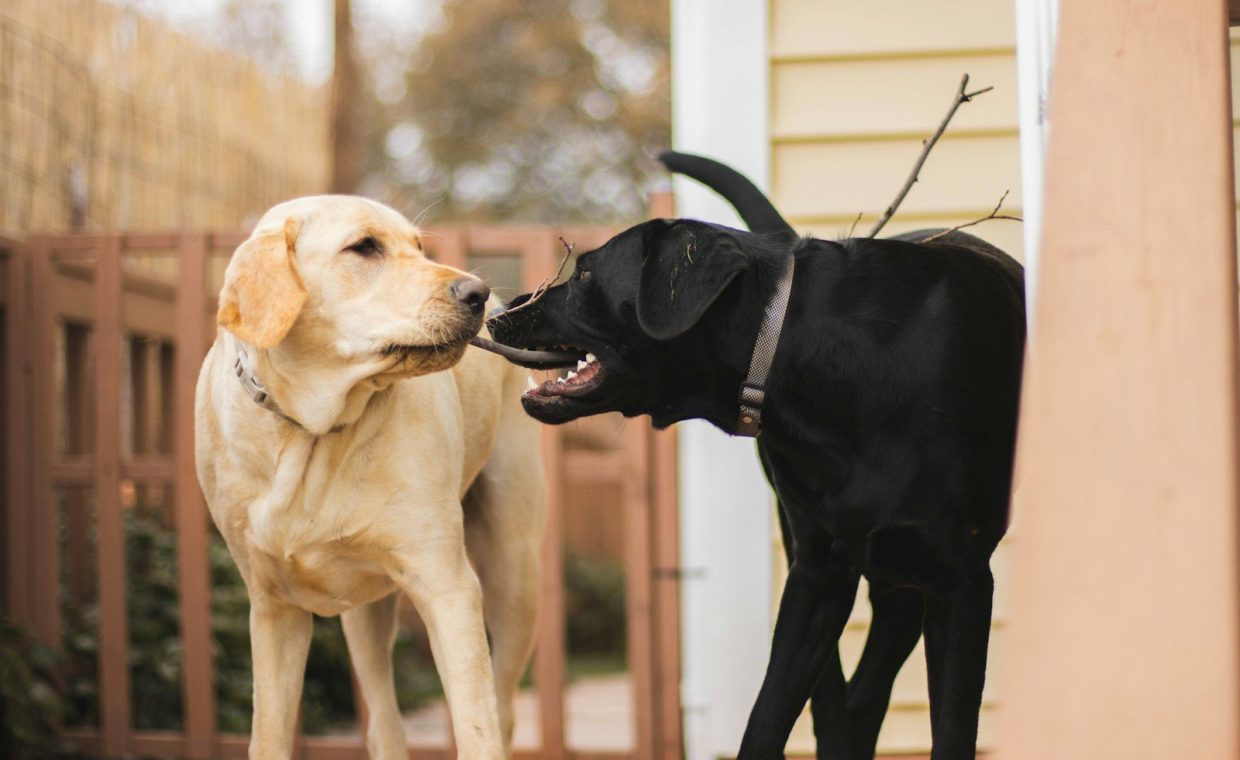
Keep early play sessions short and interrupt them before they get too wild. A two-minute play break that ends on a good note beats a twenty-minute session that tips into overarousal and a squabble.
Give It Real Time
Some dogs are best friends inside a week. Plenty take a month or more to settle into an easy, neutral coexistence, and that's completely normal. Tolerance comes first; friendship, if it comes, arrives later.
Keep feeding separately and supervising around resources well past the honeymoon period. Many minor scuffles I get called about trace back to two bowls placed a little too close, weeks after everyone seemed fine.
I tell clients to judge progress over weeks, not hours. A dog who chose to lie down across the room from the newcomer on day three is making real progress, even if it doesn't look like much.
A Quick Word on Safety
This method lowers the odds of conflict, but no method removes all risk. If a fight breaks out, never reach between two dogs with your hands. Use a loud noise, a barrier, or a blast of water to interrupt instead.
For any sudden behavior change, a dog who seems painful or unwell, or warning signs of a medical emergency like trouble breathing, collapse, seizures, or a suspected toxin, skip the training plan and contact your veterinarian or an emergency clinic right away. When in doubt about your specific dogs, your own vet or a credentialed behavior professional is the right call.
How long should I keep the dogs separated at first?
Plan to supervise all interactions and feed in separate spaces for at least the first one to two weeks, longer if either dog is still tense. Let calm, loose body language guide you rather than a fixed deadline.
My resident dog growled at the new dog. Did I ruin it?
Not at all. A growl is communication, not a verdict. Calmly add distance, reset, and slow your pace. Punishing the growl only teaches a dog to skip the warning, so listen to it instead.
Can I let them play off-leash on day one?
It's best to wait. Keep early sessions short, supervised, and on a dragging leash if safe, so you can interrupt before play tips into overarousal. Off-leash freedom is something you earn over days, not hours.
Take this slower than feels necessary and you'll almost never regret it. The dogs I see living happily together rarely had a dramatic first meeting. They had a calm, well-paced one. Give your two the boring, patient introduction they deserve, and let the friendship build at its own speed.