
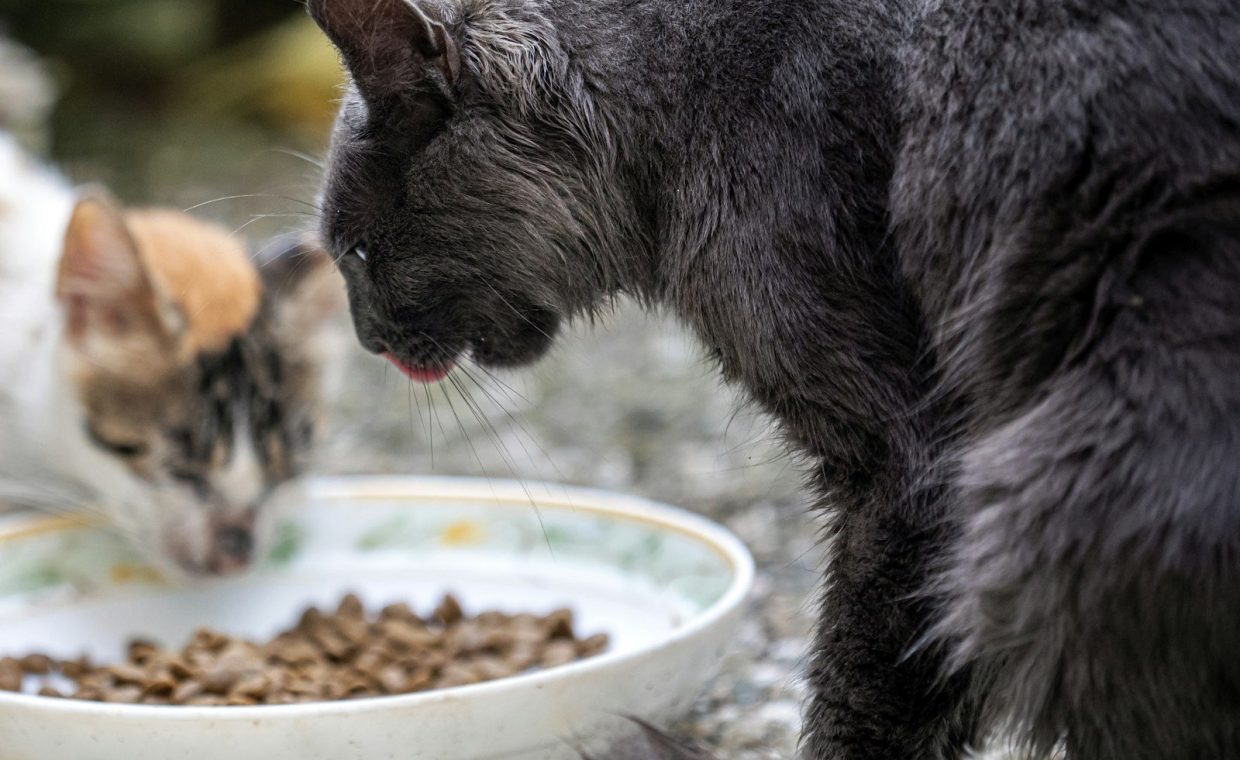
My cat, Pim, has a ritual. He sits beside his bowl, looks up at me, and waits with the patience of a creature who has already decided I will eventually do the right thing. Most mornings he is correct. But the question of what goes in that bowl, wet food or dry, is one I have watched countless owners agonize over.
It is a fair thing to wonder about. From a cat's point of view, food is not just fuel. It is the high point of the day, a sensory event, the thing they pad toward when they hear the cupboard open. So the choice matters, both for their body and for that small daily joy.
The honest answer is that both wet and dry food can keep a healthy adult cat thriving. The differences live in the details: water, teeth, waistline, and how the meal fits into your actual life. Let me walk you through how a cat experiences each one.
Two bowls, two very different meals
Wet food usually arrives in a can or pouch and runs around 70 to 80 percent moisture. To a cat, it smells loud and tastes rich, closer to the soft, wet prey their ancestors hunted. It tends to be higher in protein per bite and lower in carbohydrate.
Dry food, or kibble, is the crunchy stuff, roughly 10 percent moisture. It is shelf-stable, easy to scoop, and convenient to leave out. Many cats love the crunch and the way it can be batted across the floor first.
Neither is inherently "junk" or "premium." Quality varies enormously within each format, and the label on the back tells you far more than the format on the front. A thoughtful wet diet and a thoughtful dry diet can both meet a cat's needs.
The tradeoffs side by side
Here is how the two stack up on the factors I hear owners ask about most. Read it the way Pim would, more interested in some rows than others.
| Factor | Wet food | Dry food |
|---|---|---|
| Moisture | High (about 70-80%), supports hydration | Low (about 10%), relies on water bowl |
| Calories | Less calorie-dense per gram, easier portion control | Calorie-dense, easy to overfeed |
| Dental texture | Soft, no chewing resistance | Crunch may offer mild abrasion, not a substitute for brushing |
| Convenience | Refrigerate leftovers, can't free-feed | Scoops fast, safe to leave out longer |
| Cost | Often pricier per serving | Usually more economical |
| Picky-eater appeal | Strong aroma, often a crowd-pleaser | Convenient for grazers and puzzle feeders |
Why hydration tips the scale toward wet
Cats descended from desert animals, and they carry a quiet, inconvenient habit with them: a low thirst drive. In the wild, most of their water came from prey. A cat eating only dry food has to make up that deficit at the water bowl, and many simply do not drink enough.
Wet food does some of that hydrating work for them. Over a day, a cat on canned food takes in noticeably more water without ever choosing to drink it. For cats prone to urinary or kidney concerns, that extra moisture can be genuinely helpful.
A cat will rarely tell you they are mildly dehydrated. They just feel a little less themselves. If your cat eats mostly dry food, offer a wide, clean water bowl away from the food, and consider a pet fountain. Many cats prefer moving water.
The dental myth worth retiring
You have probably heard that kibble cleans a cat's teeth. It is one of those tidy ideas that sounds right and mostly is not. Most kibble shatters on contact and never touches the gumline where trouble actually starts.
A few prescription dental diets are engineered with larger, fibrous pieces that do scrub as the cat bites, but ordinary kibble is not a toothbrush. Wet food does not clean teeth either, to be fair. Neither format replaces real dental care.
If you care about your cat's mouth, the meaningful moves are tooth brushing where your cat tolerates it, dental treats with a recognized veterinary seal, and professional cleanings on your vet's schedule. Bad breath, drooling, or pawing at the mouth deserve a vet visit, not a food swap.
Weight, calories, and the free-feeding trap
Dry food's biggest practical risk is how easy it is to overdo. A bowl left out all day invites grazing, and kibble packs a lot of calories into a small scoop. I have met many round cats whose owners swore they "barely eat anything." The math is sneaky.
Wet food, being mostly water, fills a cat up on fewer calories and naturally encourages portioned meals. That structure helps with weight, though it asks more of your schedule.
Measure meals with an actual cup or scale, not a guess, and feed on a routine. A predictable feeding rhythm also gives an anxious or bored cat something to anticipate, which is one quiet reason some cats stop pestering their toys. If yours has lost interest in play, it is worth looking at the common reasons a cat ignores toys and how to fix it, since appetite, energy, and enrichment all travel together.
Convenience, cost, and your real life
The best diet is one you can sustain without resentment. Dry food wins on convenience: it scoops in seconds, survives a long workday in the bowl, and travels well. For a multi-cat household or a busy owner, that ease is not trivial.
Wet food asks for refrigeration, prompt cleanup, and meals you are present for. It usually costs more per serving, too. Those are real constraints, and there is no shame in letting them shape your choice.
Many owners land happily in the middle: a measured wet meal morning and night, with a small portion of dry left for grazing. Mixed feeding can capture the hydration of wet and the convenience of dry, as long as you count all of it toward the daily total.
Which wins, and for whom
If your healthy adult cat drinks little, leans toward extra weight, or has any history of urinary issues, I would tilt toward wet food, or at least a wet-leaning mix, and talk it through with your vet. The hydration edge is the strongest argument in wet food's favor.
If your cat is a contented grazer, you manage a multi-cat home, or budget and schedule rule the day, a quality dry food fed in measured amounts is a perfectly responsible choice. Pair it with an inviting water source and you have closed most of the gap.
A sudden change in appetite, weight loss, straining in the litter box, vomiting, or lethargy is a health signal, not a flavor preference. See your veterinarian. For emergencies such as trouble breathing, collapse, seizures, or suspected poisoning, contact an emergency clinic right away.
Whatever you choose, transition slowly over a week or so, mixing increasing amounts of the new food into the old. Cats are creatures of habit, and an abrupt switch can mean a hunger strike or an upset stomach. A calm, gradual change keeps mealtime the happy event it should be, the same gentle, low-stress approach that makes a difference everywhere, including a stress-free vet trip for anxious cats.
Can I feed my cat both wet and dry food?
Yes, and many cats do beautifully on a mix. Offer measured wet meals for hydration and a small portion of dry for grazing, counting all of it toward the daily calorie total so your cat does not quietly gain weight.
Does dry food really clean my cat's teeth?
Ordinary kibble does little for dental health, since most pieces shatter and miss the gumline. Real dental care means tooth brushing, vet-approved dental products, and professional cleanings on a schedule your veterinarian recommends.
My cat barely drinks water. Should I switch to wet food?
A wet or wet-leaning diet is a reasonable way to boost a low-drinking cat's water intake, alongside a clean bowl or a fountain with moving water. If you have any urinary or kidney concerns, ask your vet to confirm the best plan.
There is no single right bowl for every cat, only the right fit for yours. Watch how your cat eats, drinks, and carries their weight, and let that quiet feedback guide you. And while we are talking about caring well for the details, the same "know when to call a pro" instinct that helps with choosing between a professional groomer and a DIY approach applies here too: loop in your veterinarian whenever something feels off. Pim, for the record, still believes the answer is "more."