
The first thing a kitten does in a new home is look for somewhere small to disappear. Behind the couch, under a bed, inside the box you carried them home in. That instinct tells you almost everything about what they need those first weeks: not abundance, but a few right things in the right places.
I've watched a lot of kittens arrive at new homes, and the smoothest landings rarely come from the biggest shopping hauls. They come from a small, thoughtful kit that lets a tiny cat eat, hide, scratch, and explore on their own timeline. Here are the eight supplies I'd want waiting before a kitten walks through the door, written as a sort of wishlist from the cat's own point of view.
1. A litter box that's easy for tiny legs
A kitten's whole world is low to the ground, and a tall-sided box with a flap door reads as a cave they have to climb into. For the early weeks, a shallow, open tray is far kinder. They can step in, do their business, and step out without a single hesitation.
Place it somewhere quiet but not hidden away in a basement they can't reach yet. A kitten won't trek across the house to a box they've half-forgotten exists. Keep it on the same floor where they sleep and play.
The usual rule is one box per cat plus one extra. For a single kitten in a small space, start with two boxes a room or two apart so accidents have less chance to happen while they learn the layout.
2. Unscented, low-dust litter
Cats read the world through their nose, and a heavily perfumed litter can be genuinely off-putting to a small one still forming opinions about where bathrooms belong. Most kittens settle fastest with a soft, unscented clumping litter, though some breeders raise litters on a finer texture worth matching at first.
Skip anything that throws up clouds of dust. Kittens dig with their faces close to the surface, and you don't want them breathing that in. A plain, gentle litter avoids a lot of early refusals.
3. Food made for kittens, not adult cats
Kittens grow at a startling pace, and their food has to keep up with more protein, fat, and calories than an adult formula provides. Look for a food labeled for growth or for all life stages, and try to match whatever the kitten was already eating to avoid an upset stomach during the move.
Whether you lean toward pouches, kibble, or a mix is a fair question, and there's no single right answer. If you're weighing the trade-offs, our breakdown of wet versus dry cat food and which suits your cat walks through the texture, hydration, and dental angles in plain terms.
Any change in appetite, energy, or stool that lasts more than a day or two in a young kitten deserves a call to your veterinarian. Little bodies have small reserves, and they can go downhill faster than adult cats.
4. Two bowls, kept apart from the litter
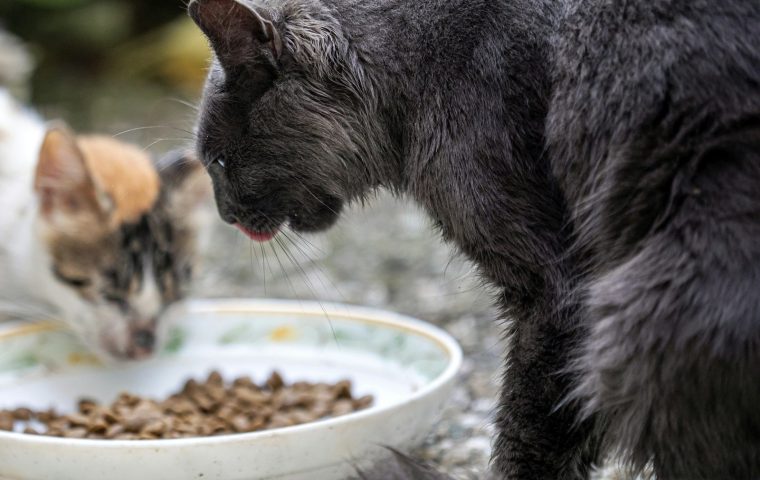
Cats are oddly particular about geography. Food next to the toilet is, in their mind, a contradiction, and many will quietly refuse one or the other if the two sit too close. Give the food and water their own little corner, away from the box.
Shallow, wide bowls suit kittens better than deep ones that press on their whiskers. Ceramic or stainless steel are easy to keep clean and don't hold onto smells the way some plastics do.
5. A scratching post they'll actually use
Scratching isn't bad behavior. It's how a cat sheds claw sheaths, stretches their spine, and leaves their signature on the room. Give them nothing to scratch and they'll choose your couch, not out of spite, but because the need doesn't pause for furniture.
Pick a post tall and sturdy enough that a growing kitten can stretch fully against it without tipping it over. Sisal rope and rough cardboard are the textures most cats reach for. A wobbly post gets abandoned fast.
Set the post near where your kitten already likes to scratch or right by their favorite nap spot. Cats often stretch and scratch the moment they wake up, so the location matters as much as the post itself.
6. A carrier you introduce early
The carrier shouldn't appear only on the dreaded morning of a vet visit. To a cat, a box that means a trip is a box to fear. Leave it out in the living room with a soft towel inside and let it become just another cozy cave they choose on their own.
A hard-sided carrier that opens from the top makes loading a nervous kitten far gentler than wrestling one through a small front door. You'll want that ease for years of checkups.
Getting a kitten comfortable with the carrier now pays off at every appointment later. Our guide to building a calmer, lower-stress vet trip for anxious cats leans heavily on this early familiarity, and it's much easier to teach a relaxed kitten than to un-teach a frightened adult.
7. Safe toys for a body built to hunt
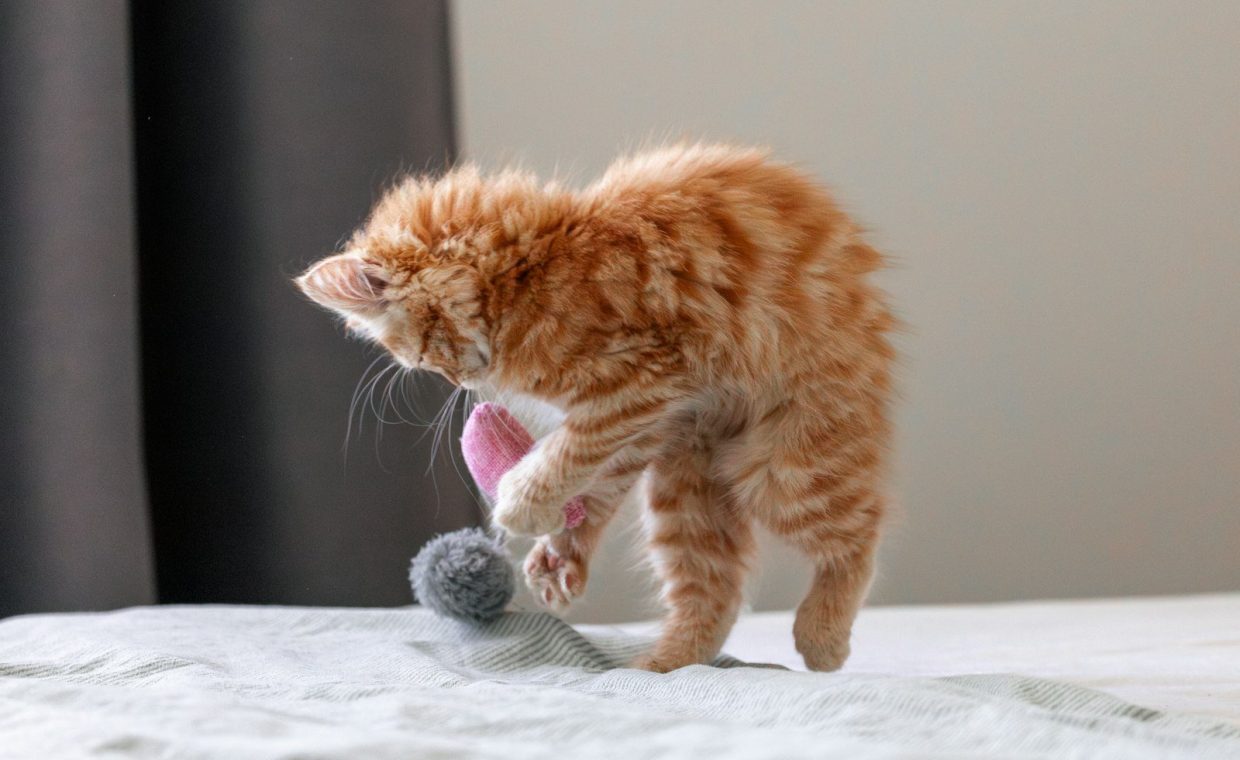
A kitten's play is rehearsal for the hunt: the pounce, the chase, the grab. Wand toys with feathers let you move the "prey" while keeping fingers out of reach of those needle-sharp teeth. Small balls and soft mice give them something to bat around solo.
Be choosy about size and parts. Anything small enough to swallow, or a string left out unsupervised, can turn a happy game into an emergency. Put string and wand toys away between sessions.
Swallowed string, ribbon, or tinsel can bunch the intestines and is a true emergency. If your kitten seems to be choking, retching, or you see string trailing from the mouth or rear, do not pull it. Call your vet or an emergency clinic right away.
8. A grooming kit and a cozy hiding spot
Two small things round out the kit, and both pay off for years. A soft brush gets a kitten used to being handled gently, and starting tooth care young makes a world of difference later. Easing into it now means fewer battles down the road; our walkthrough on brushing a pet's teeth without turning it into a fight is built for exactly this slow, patient start.
The cozy hiding spot is the piece people forget. A covered bed, a cat cave, or even a quiet cardboard box gives a kitten a place to retreat and feel safe. A cat with somewhere to hide grows bolder faster than one with nowhere to go, and from the cat's point of view, that little shelter may be the most generous thing on this whole list.
Setting up before the kitten arrives
The kindest move is to have all eight things in place before pickup day, then let your kitten find them at their own pace. Resist the urge to follow them room to room. Sit on the floor, stay still, and let curiosity do the work.
Most kittens go from hiding to exploring to claiming your lap within a week or two once their world feels predictable. And if anything feels off in those first days, an unusually quiet kitten, a refused meal, a litter box left untouched, trust your gut and check with your vet sooner rather than later.
How much does a basic kitten starter kit cost?
You can cover the essentials reasonably, often somewhere around the price of a nice dinner out for the litter, box, bowls, a post, and a couple of toys. Food is the ongoing cost. Buying a sturdy scratching post and carrier once usually beats replacing cheap versions later.
Do I really need two litter boxes for one kitten?
It's not strictly required, but it helps. A second box gives a kitten still learning the house another easy option and lowers the odds of an accident. As they grow confident and reliable, you can reassess what works for your space.
When should my new kitten see a veterinarian?
Plan an early checkup within the first week or so of bringing them home, even if they seem healthy, to confirm vaccines, deworming, and overall health. Sooner if you notice anything worrying like poor appetite, lethargy, or trouble breathing.
A new kitten doesn't ask for much, just a few thoughtful things and the patience to let them settle. Get the basics in place, watch how your little one uses each one, and adjust as their personality unfolds. The early weeks pass quickly, and a calm, well-prepared start tends to grow into a calm, trusting cat.