
The first time I let a client's border collie mix off-leash in an open field, my stomach was in my throat. We'd practiced for weeks. I dropped the long line, said "go sniff," and held my breath. He trotted out twenty feet, glanced back, and came barreling home the second I called. That little check-in is the whole game.
Off-leash freedom is one of the best gifts you can give a dog, but it's earned, not granted by age or breed. I've watched confident owners rush it and spend a month rebuilding trust after a scare. I've also watched nervous owners hold on far longer than they needed to, while a perfectly reliable dog stared up at them, ready.
So here are the signs I look for on the training floor, the green lights that say a dog is ready. Read them honestly. Your dog will tell you the truth if you're watching.
1. A rock-solid recall, even with distractions
This is the non-negotiable one. Not a recall that works in your living room. One that works when a squirrel is sprinting across the path. If your dog comes flying back nine times out of ten in a fenced yard, you're close, but the real test is competing motivation.
I build this with a long line first, calling the dog mid-sniff, mid-play, mid-everything, and paying generously every time. The dogs who graduate are the ones who treat the recall cue like the best news they've heard all day, not a buzzkill.
Never call your dog to do something they hate (nail trims, leaving the park) using your emergency recall word. Keep that one sacred. It should only ever predict good things.
2. They check in with you without being asked
That glance back? Watch for it. A dog who naturally turns to find you every minute or two, especially after a new smell or a noise, has built you into their map of the world. They're not just tolerating you. They're tracking you.
If your dog wanders off and never looks back, that's a flag, not a flaw. It usually means the relationship needs more reps. The kind of consistent, low-pressure practice I describe in my account of daily ten-minute sessions with a reactive dog is what builds that automatic check-in over a few weeks.
3. They respond to basic cues anywhere, not just at home
A sit that only happens in the kitchen isn't a real sit yet. Before I trust a dog off-leash, I want to see "sit," "down," and "wait" hold up in a parking lot, at a friend's house, and near other dogs. Cues that travel mean your dog can hear you when it counts.
If you're still cementing the foundations, that's completely fine. Go back to basics. Even something as simple as teaching a reliable sit with positive reinforcement in three or four different locations does more for off-leash readiness than people expect.
4. They can settle when the world gets exciting
Arousal is the quiet killer of off-leash reliability. A dog who hits a certain excitement level simply can't think: recall, cues, all of it goes offline. I look for a dog who can hit a high, then visibly come back down: a shake-off, a slower tail, a willingness to take a treat again.
Practice this on purpose. Get your dog revved up with play, then ask for calm. If they can find the brakes themselves, they'll be able to find them in a field too.
5. Their body language is loose and confident, not frantic
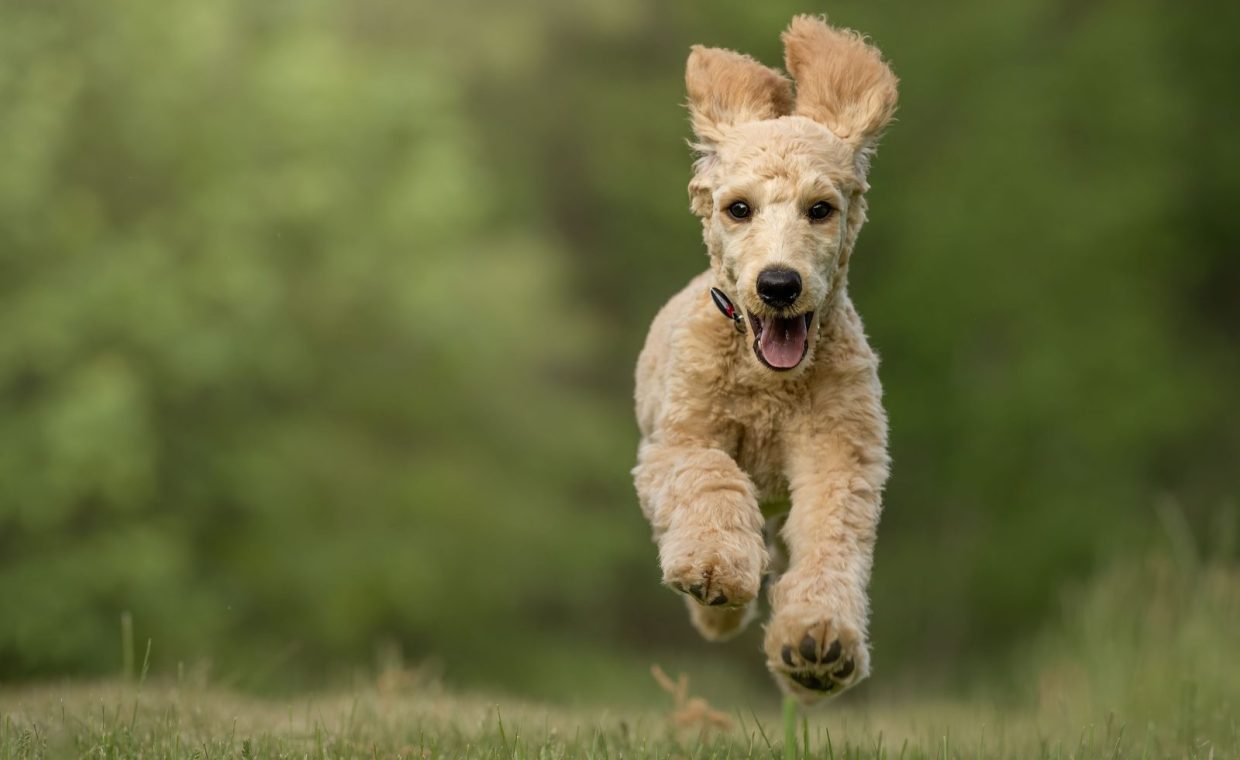
Freedom should look easy. A ready dog moves with a loose body, a soft mouth, and curious-but-relaxed energy. A not-ready dog looks frantic: bolting from spot to spot, hyper-fixated, or so overwhelmed they shut down entirely.
I'd rather see a dog who saunters out, sniffs a bush, and ambles back than one who explodes off the line like a cannonball. Confidence is calm. Frantic is a dog who isn't coping yet.
6. They've learned impulse control with a real "wait"
Can your dog hold position at an open door? Pause before chasing a thrown ball? That gap between impulse and action is the muscle you're really training. It's the half-second that lets a dog hear "leave it" before they sprint toward a road.
Off-leash isn't about a dog who never wants to chase things. It's about a dog who can feel the urge to chase and choose you instead. That choice is built one small "wait" at a time.
7. They're neutral around other dogs and people
A dog who lunges, fixates, or panics around other dogs isn't ready for a space where they might meet one off-leash. Neutrality is the goal. Your dog notices the other dog, says a polite hello or simply carries on. No drama in either direction.
This takes time, and it often starts in puppyhood. Much of the social wobbliness I see in adolescent dogs traces back to early gaps; the patterns I cover in six common new-puppy mistakes that slow bonding are the same ones that quietly undermine off-leash trust later.
8. They recover quickly when something startles them
Real environments have surprises: a cyclist, a loud truck, a deer crashing through the brush. I'm not looking for a dog who never gets startled. I want one who flinches, then settles within a few seconds and looks to me instead of fleeing.
That resilience is a sign your dog feels safe with you as their anchor. A dog who bolts blindly when spooked is telling you the leash stays on a while longer. There's no shame in that. It's just information.
9. You can read your own dog honestly
The last sign isn't about the dog at all. It's about you. Owners who succeed off-leash can watch their dog clearly and admit what they see, even when the answer is "not yet." Wishful thinking is how dogs end up in scary spots.
Start where the stakes are low: a fenced field, a quiet hour, a long line still attached at first. Let success build success. The dogs I trust most off-leash got there because their humans were patient enough to let them prove it.
Always know your local leash laws and choose legal, safe spaces. If your dog ever shows sudden collapse, trouble breathing, seizures, signs of bloat, or you suspect they've eaten something toxic outdoors, skip the training questions and contact your vet or an emergency clinic right away.
What to do if your dog isn't there yet
Missing a few of these? Good. Now you know what to work on. Pick the weakest link, usually recall or arousal, and give it focused practice for a few weeks before retesting. Keep the long line on during early sessions so a missed recall is a teaching moment, not a 911 call.
And if your dog's behavior feels rooted in fear, pain, or sudden change, loop in your veterinarian or a qualified behavior professional. Sometimes what looks like stubbornness is discomfort, and that's worth ruling out before you push training.
At what age can a dog go off-leash?
There's no magic age. It's about behavior, not birthdays. Some dogs are ready around a year old with solid recall and impulse control; others, especially independent or high-prey-drive breeds, need much longer. Judge readiness by the signs, not the calendar.
My dog has great recall at home but ignores me outside. Why?
Skills don't automatically generalize. A cue learned in a quiet kitchen has to be re-taught in busier places with more distractions and better rewards. Practice in several low-stakes locations before assuming the recall is unreliable.
Is a long line a good way to start off-leash training?
Yes, a long line (15 to 30 feet) is one of the safest tools for the transition. It gives your dog freedom to make choices while you keep a safety backup, so a missed recall becomes practice instead of a real risk.
Off-leash freedom isn't a finish line you cross once; it's a relationship you keep tending. Watch your dog, be honest about what you see, and let them earn each bit of space. Go at your dog's pace, and that look back over the shoulder will become the most reliable thing in your day.