
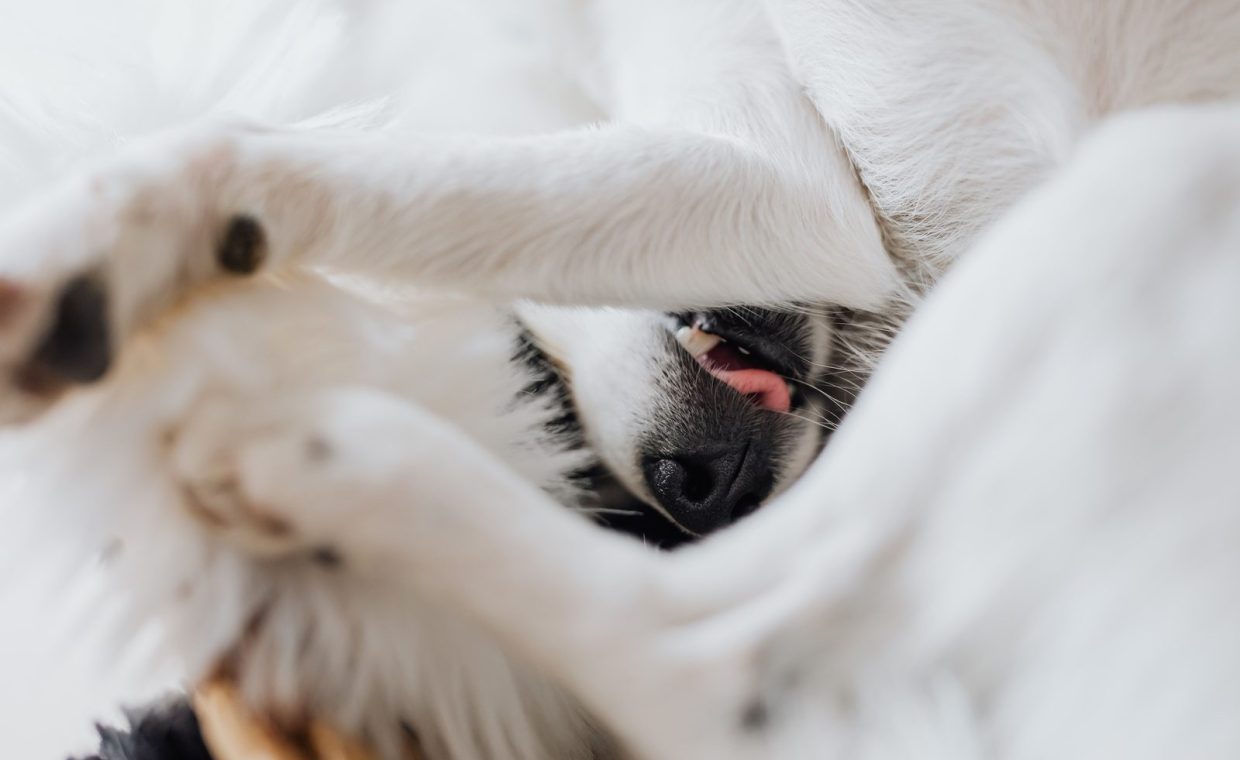
The first time a worried owner brought me her cocker spaniel, she set him on the training mat and he immediately folded down and went to work on his front paw: lick, lick, lick, like he was on a deadline. "He does this all evening," she said. "Is something broken?" Nothing was broken. But that steady little sound was telling us something, and once we learned to read it, his evenings got a lot quieter.
Paw-licking is one of the most common things owners ask me about, right up there with leash pulling. A few licks after a muddy walk are normal grooming. The kind that keeps you up at night, wet fur, a stained reddish-brown coat, a dog who won't settle, has a reason behind it. Usually six, in my experience.
Let's walk through them the way I would on the floor: calm, one at a time, no panic. You're not a bad owner because your dog does this. You're just paying attention.
Allergies: the usual suspect
If I had to bet on one cause, I'd bet on allergies. Itchy skin sends dogs straight to their paws, because that's where they can reach and self-soothe. The trigger might be something they eat, or something they walk through: grass, pollen, certain cleaners, or the salt and chemicals on winter sidewalks.
Here's how it actually looks day to day. You notice the licking flares in spring, or always after a particular treat, or worse right after a walk on treated grass. That pattern is your clue. The skin between the toes may look pink or feel warm.
Reddish-brown saliva staining on the fur, licking that comes in seasons or after specific foods, and sometimes ear scratching at the same time. Patterns matter more than any single bad evening.
Food trials and allergy management are genuinely a vet's territory, not a guessing game with internet supplements. Your veterinarian can help you run an elimination diet properly or look at environmental triggers. Don't start swapping foods randomly for months. It muddies the picture they need to read.
A myth worth clearing up: it is not always "just boredom"
People love to wave paw-licking off as a bad habit, and sometimes it is. But I've watched too many genuinely itchy or sore dogs get labeled "naughty" while a real problem quietly got worse. So let me dispel that one early.
A dog who licks because of skin irritation is not misbehaving. Scolding him for it is like yelling at someone for scratching a mosquito bite. The lick is a symptom. Find the why first, and the behavior usually eases on its own.
That said, boredom is real too, which is its own section below. The skill is telling them apart, and that's where a little detective work pays off.
Pain or injury you can't see
Dogs are stubbornly stoic. A torn nail, a thorn, a cracked pad, a tiny grass seed wedged between the toes: any of it can drive focused licking on one specific foot. That's the tell: when a dog hammers away at a single paw and ignores the others, I think injury before allergy.
Get down and look. Spread the toes gently, check the pads, check the webbing, look for swelling, a foreign object, or a broken nail. If you find something stuck and it slides out easily, great. If it's embedded, bleeding, or the paw looks swollen, that's a vet visit, not a tweezers-at-home project.
Compare paws side by side in good light. Heat, swelling, or limping on one foot points to pain. Even, all-four licking points more toward itch or stress. The asymmetry is your shortcut.
Anxiety and stress-licking
This is the one people miss most. Just like some humans bite their nails, dogs self-soothe by licking, and the rhythm of it actually releases calming chemicals in their brain. So a stressed dog finds real comfort in working a paw, which is exactly why it can spiral into a loop.
I see it most in dogs facing a big change: a move, a new baby, long stretches alone, or a shaky start to alone-time. If your dog only licks when you leave or during thunderstorms, you're likely looking at stress, not skin.
The fix is building security, not punishment. For pups especially, a calm den routine helps enormously, which is why I send anxious-dog owners to my walkthrough on how to crate train a puppy without the stress. A settled, safe space takes the edge off a lot of nervous licking. Enrichment, predictable routines, and gentle counter-conditioning do the rest.
Boredom and pent-up energy
Now the boredom case. A dog with nothing to do and energy to burn will invent a job, and licking is an easy one. This shows up a lot in clever working breeds and in young dogs who aren't getting enough to chew on, sniff, or solve.
If your evenings are licking-heavy and your dog's days are short on walks, training, and puzzles, test the theory: add a real walk, a stuffed chew, and ten minutes of training, then watch what the paws do. A tired, mentally satisfied dog usually forgets all about his feet.
This is also why I nudge new owners toward simple daily training games. Teaching focus work, like learning to teach your dog to sit with positive reinforcement, drains mental energy and gives that busy brain a better outlet than the carpet-side spa treatment.
Parasites, infection, and the secondary itch cycle
Fleas, mites, and yeast or bacterial infections all make skin itch, and the paws take the brunt. There's also a sneaky loop here: constant licking keeps the skin damp, damp skin grows yeast, yeast itches more, so the dog licks more. Round and round it goes.
The giveaway is often smell. A yeasty paw has a distinct musty, corn-chip odor, and the skin may look angry or feel greasy. That cycle rarely breaks on its own, so this is a "book the vet" situation rather than a wait-and-see one.
Open sores, bleeding, strong odor, swelling, limping, or licking so relentless your dog can't rest: get a veterinarian involved. And for any true emergency, like trouble breathing, collapse, seizures, or suspected poisoning, contact your vet or an emergency clinic right away.
How to settle a licker at home
Once you've ruled out the scary stuff, you can do a lot from your living room while you and your vet sort the underlying cause. None of this replaces a proper diagnosis. Think of it as making your dog comfortable in the meantime.
Wipe the paws after walks to clear off pollen, salt, and grass residue. Keep nails trimmed and the fur between the pads tidy so debris has fewer places to hide. Add enrichment and exercise so a bored brain has somewhere to go. And gently interrupt-and-redirect anxious licking with a chew or a quick game rather than a scolding.
If you're early in your dog journey and feeling overwhelmed by all of this, take heart. A lot of paw-licking simply comes with the wrong-fit or under-stimulated stage of ownership. Choosing a manageable match in the first place helps, which is part of why I point newcomers to these beginner-friendly breeds for first-time owners before they ever pick a puppy.
Six common causes: allergies, hidden pain, anxiety, boredom, parasites or infection, and the itch-lick cycle. Watch the pattern, one paw versus all four, seasonal versus situational, wipe paws, add enrichment, and loop in your vet for anything raw, smelly, swollen, or sleep-stealing.
Knowing when it's a vet trip, not a home fix
I tell every owner the same thing: trust the trend. Occasional licking after a walk is nothing. Licking that's escalating, raw, one-sided, smelly, or stealing your dog's sleep deserves professional eyes. Your veterinarian can untangle allergy from infection from pain far faster than weeks of home experiments will.
And please don't reach for human medications or home remedies you read about in a forum. What's safe for us can be harmful for dogs, and dosing is something only your vet should decide. When in doubt, ask them. That's exactly what they're there for.
Is it normal for my dog to lick its paws a little every day?
A bit of grooming, especially after walks, is completely normal. The concern is licking that's constant, escalating, focused on one paw, or paired with redness, odor, swelling, or restlessness. Pattern and intensity tell you more than the licking itself.
Can I put anything on my dog's paws to stop the licking?
Wiping paws after walks and keeping them clean and trimmed helps. Skip human creams, ointments, or medications, since many are harmful to dogs and dosing is risky. Ask your veterinarian before applying anything to irritated skin.
How do I tell anxiety-licking from an allergy?
Watch the timing. Licking tied to departures, storms, or change leans toward stress. Licking that flares by season, after certain foods, or with red, itchy skin leans toward allergy. When it's unclear, your vet can help you sort it out.
Decoding your dog's paws is mostly patience and paying attention: the same skills that make everything else on the training floor easier. Watch the pattern, ease the boredom and stress you can control, and lean on your veterinarian for the rest. Your dog isn't being difficult; he's just telling you something, and now you know how to listen.