
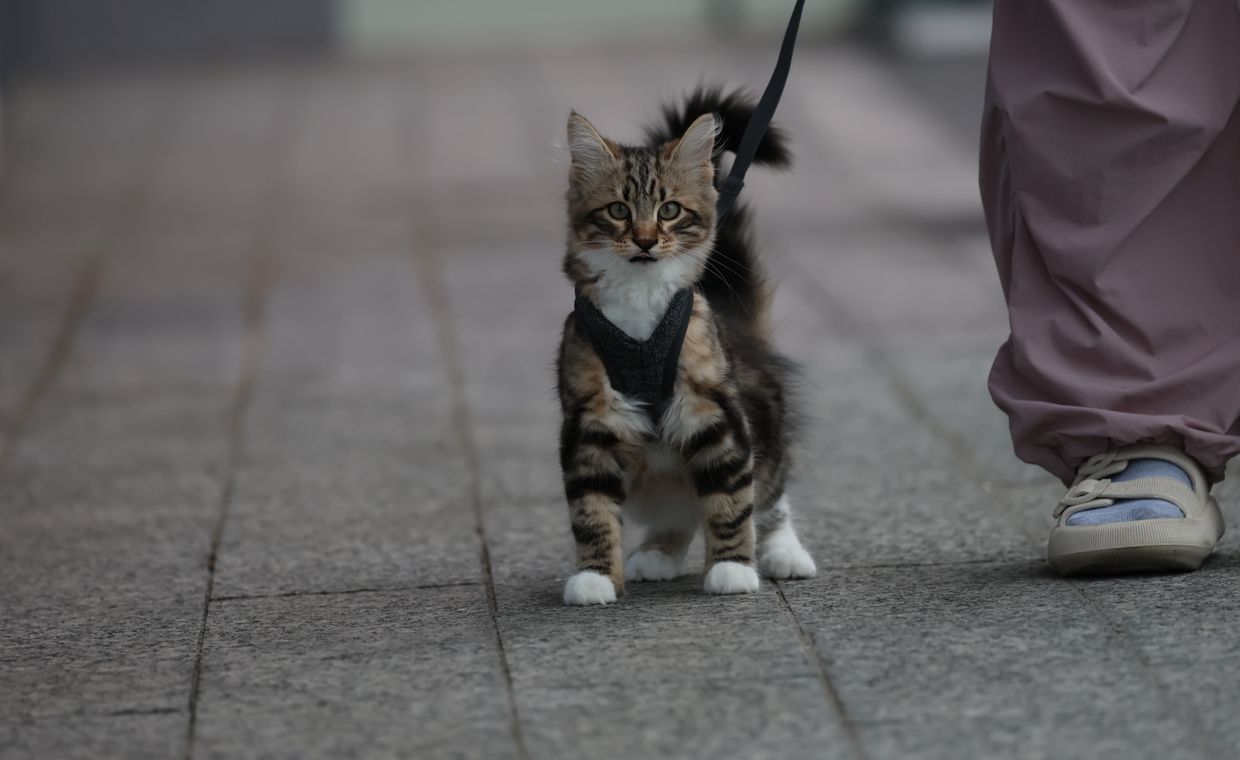
The first time I clipped a leash on a client's tabby named Biscuit, he flopped over sideways and refused to move, as if the harness had switched off his legs. His owner laughed nervously and asked if she had broken her cat. She had not. That dramatic flop is one of the most common reactions I see, and it passes in a few short sessions.
Leash training gives an indoor cat a taste of grass, wind, and bird sounds without the risks of free roaming. Done well, it takes most cats two to four weeks of short daily practice. Done in a rush, it teaches your cat that the harness means panic.
I want to walk you through the slow version, because slow is what actually works. Cats do not respond to pressure the way dogs sometimes do. They respond to feeling safe, then curious, then a little bold.
Why Leash Time Is Worth the Effort
A leashed walk is controlled outdoor access. Your cat gets real enrichment, and you avoid the traffic, parasites, and territorial fights that come with unsupervised roaming.
If you are weighing how much outdoor exposure your cat truly needs, it helps to understand the tradeoffs first. My overview of indoor vs outdoor cat health lays out the real numbers on lifespan and disease risk, and leash walks sit in a nice middle lane between the two.
Not every cat wants this, and that is fine. Bold, curious, food-motivated cats tend to take to it fastest. Shy cats can learn too, but they set the pace, always.
Leash training is not about making your cat walk beside you like a dog. Success looks like your cat calmly exploring on a loose leash while you follow at a relaxed distance.
Choosing the Right Harness and Leash
Gear matters more with cats than with almost any other pet, because cats are escape artists. A collar alone will not do. Cats can slip a collar in a heartbeat, and a startled cat pulling against a neck collar can hurt itself.
You want a harness that distributes pressure across the chest and shoulders. The two shapes I recommend most are the H-style and the vest, or wrap, style. Here is how they compare.
| Harness type | Best for | Escape resistance | Comfort notes |
|---|---|---|---|
| H-style (figure 8) | Bold cats, warm climates | Good, if snug | Lightweight, less coverage, easy to see fit |
| Vest / wrap style | Anxious or slippery cats | Excellent | More body coverage, feels secure, can run warm |
| Collar only | Never for walks | Poor | Cats slip these easily, risk of neck injury |
For the leash itself, keep it light and around 4 to 6 feet. Skip retractable leashes for now. They encourage your cat to wander too far, and the constant tension confuses the training.
Make the Harness Boring
Before you ever attach a leash, your cat needs to decide the harness is no big deal. Leave it near the food bowl for a few days so it picks up familiar smells and stops being a strange object.
Then drape it over your cat's back for a second or two, and pay with a treat. Build up to fastening it, then to leaving it on for five minutes indoors while your cat eats or plays.
This is where you might see the Biscuit flop. Do not comfort the flop, and do not force movement. Toss a favorite toy, let curiosity win, and end the session while your cat is still relaxed.
Watch the tail and ears, not the legs. A low swishing tail and airplane ears mean stop. Forward ears and a loose body mean keep going.
Add the Leash Indoors
Once the harness feels ordinary, clip on the leash and let your cat drag it around the house under your eye. This teaches your cat that the leash follows, it does not grab.
After a few sessions, pick up the leash and simply follow your cat wherever it goes. No steering yet. You are the anchor, not the driver.
Reward any calm walking with a treat or gentle praise. Cats read your energy closely, so keep your own body loose and unhurried. If you feel tense about the leash, your cat will feel it through the line.
The First Trip Outside
Pick a quiet, enclosed spot for the debut. A fenced yard, a calm balcony, or a still corner of the garden works far better than a busy sidewalk. Carry your cat outside in your arms or a carrier, then set it down and let it choose whether to move.
Your cat may sit and stare for ten minutes. That is not failure, that is a cat processing a lot of new information. Let it happen.
Keep the first outings to five or ten minutes. Always end before your cat gets overwhelmed, and always bring your cat back inside yourself rather than letting it lead you to the door. You decide when outdoor time ends.
- Harness on indoors, cat relaxed and fed
- Carry, do not walk, your cat to the quiet spot
- Set down and wait, no pressure to move
- Follow at a loose leash for 5 to 10 minutes
- Carry back inside while your cat is still calm
Reading Your Cat and Knowing When to Stop
Body language is your whole toolkit here. A confident outdoor cat moves with a loose gait, an upright or gently curved tail, and relaxed whiskers. A stressed cat crouches low, puffs up, tucks its tail, and may vocalize.
If you see the stressed set of signals, calmly scoop your cat and head in. Pushing through fear only teaches your cat that outside means dread, and you will lose weeks of progress in one bad afternoon.
Some cats simply prefer the couch, and there is real dignity in that choice. If yours decides leash life is not for it, redirect that energy indoors. My guide to enrich indoor cat day is full of ways to give a homebody cat plenty of stimulation without a single step outside.
How Cats and Dogs Differ on Leash
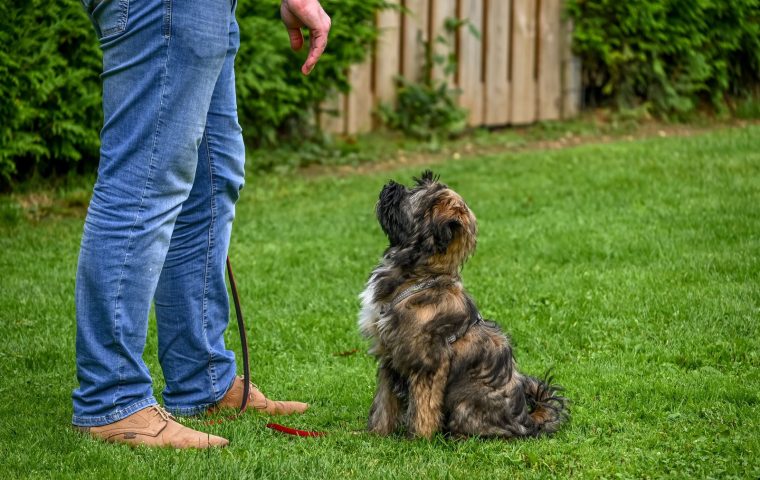
People often expect leash training to look the same across pets. It does not. With dogs, a lot of the work centers on control and coming when called. If you also have a dog, you know how much structure goes into teaching a solid reliable recall for a dog.
Cats are the opposite. You are not teaching obedience, you are teaching trust. The leash is a safety line, not a steering wheel, and the walk belongs to the cat far more than it belongs to you.
Once that clicks, the whole thing gets easier. You stop trying to lead and start learning to follow a curious little explorer who happens to be attached to you.
How long does it take to leash train a cat?
Most cats need two to four weeks of short daily sessions, though anxious cats can take a couple of months. Move at your cat's pace, not the calendar's, and never skip the indoor steps.
Is it too late to leash train an older cat?
Not at all. Adult and senior cats can learn, they just tend to be more cautious, so progress is slower. Keep sessions calm and short, and let a confident temperament, not age, guide your expectations.
My cat freezes and will not walk. What do I do?
Freezing usually means overwhelm, not stubbornness. Go back a step, shorten your sessions, and add treats. If your cat seems distressed or stops eating around the harness, check in with your vet to rule out any underlying discomfort.
Take the whole thing slower than you think you need to, because with cats, patience is the actual technique. Celebrate the small wins, like the first relaxed sniff of grass or the first time the harness goes on without a flop. Some cats trot out the door and never look back, others decide the windowsill is adventure enough, and both are good outcomes. Follow your cat's lead, keep it safe, and enjoy the world through those curious eyes.