
I once watched a lovely retired couple get dragged down a gravel path by an eighty-pound shepherd named Biscuit. They weren't doing anything outrageous. They were making the same handful of small mistakes I see almost every week on the training floor, each one quietly stacking on the last until a simple walk felt like wrestling a runaway sled.
Here's the good news I told them, and the thing I want you to hear too: the walk is rarely broken because of the dog. It's usually a few habits we picked up without noticing. Fix those, and the leash goes soft.
Below are the seven slip-ups I correct most often, why each one matters, and the small change that turns it around. No shame, no fancy gear required.
1. Treating the walk as the only exercise
A lot of owners lean on the daily walk to burn off every ounce of energy. When the dog is wound up like a spring, the walk becomes a tug-of-war from the first step, and you spend it managing a body that needed to move an hour ago.
Why it matters: An under-exercised dog pulls, lunges, and scans the world like it owes him money. You're not training a calm walker. You're trying to steer a pressure cooker.
The fix is five minutes of real movement before the leash comes out: a quick game of fetch, a flirt pole, a few flights of stairs. Then ask whether your routine matches your dog's actual needs, because a bored herding breed and a sleepy senior want very different walks. Our breakdown of how much daily exercise your dog genuinely requires is a useful gut-check.
2. Letting the leash stay tight by default
This one is sneaky because it feels safe. We grip up, keep the leash short and taut, and brace for trouble. But constant tension teaches the dog that pulling is simply how walking feels; there's nothing to release into, so why stop?
Why it matters: A tight leash creates opposition reflex. The dog leans against pressure the same way you'd lean into a strong wind. You're accidentally rewarding the exact thing you're trying to stop.
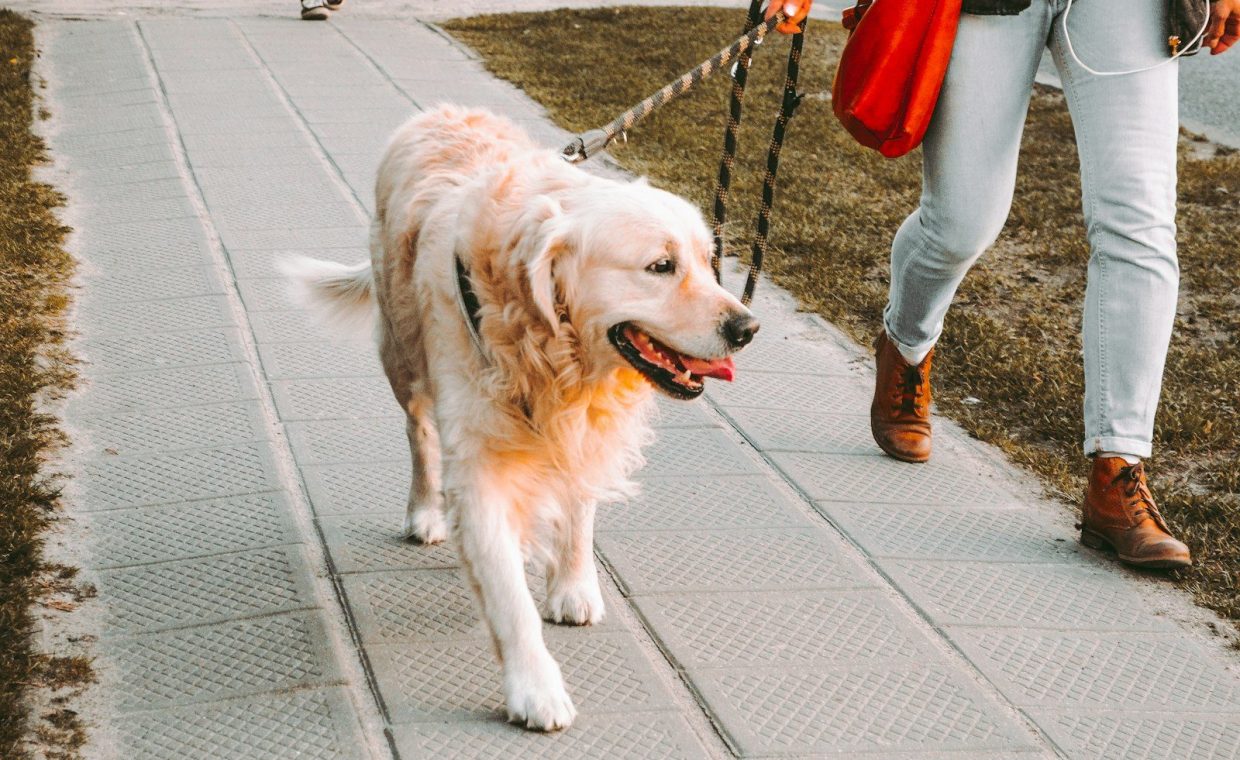
Aim for a soft J-shape of slack in the leash. When your dog drifts ahead and the line goes tight, stop moving entirely. The instant the leash loosens, walk on again. Tight means the world freezes; loose means we go.
3. Rushing past every sniff
I get it. You have fifteen minutes and a dog who wants to read every blade of grass like it's the morning paper. So we march, and the dog plants his feet, and now it's a battle of wills.
Why it matters: Sniffing is how dogs decompress. A nose-down dog is a calmer, more satisfied dog, and a walk with zero sniffing is the canine version of a treadmill in a windowless room.
Build in "go sniff" breaks on purpose. Pick a few spots where your dog gets free rein to investigate, then cue movement again. You'll find a dog who got to sniff is far easier to walk past the things you'd rather skip.
4. Punishing the reaction instead of managing the distance
Your dog spots another dog across the street, stiffens, and starts to bark. The instinct is to correct hard: a yank, a sharp "no." It rarely helps, and often it teaches the dog that other dogs predict something unpleasant.
Why it matters: Reactivity is usually fear or over-arousal, not defiance. Adding pressure to a frightened dog stacks stress on stress. The leash isn't a steering wheel for emotions.
The fix is distance, not force. Add space calmly, reward the moment your dog notices the trigger and looks back at you, and keep those reps easy. I lean on a clear marker so the dog knows which choice paid off. Our comparison of clicker versus verbal markers and which trains faster walks through both honestly.
Biscuit, the shepherd from earlier, wasn't aggressive. He was overwhelmed. Once his owners started crossing the street early and feeding him chicken for calm glances, his "lunging" shrank to a glance and a tail wag inside three weeks.
5. Skipping the warm-up with a nervous or new dog
If your dog is anxious, freshly adopted, or just slow to trust, charging straight out the front door onto a busy sidewalk is asking a lot. A scared dog can't learn loose-leash anything while every car and stranger feels like a threat.
Why it matters: A dog operating in panic mode isn't being stubborn; its thinking brain is offline. Pushing through floods the dog and erodes the trust you're trying to build.
Start smaller. Walk quiet loops at quiet hours, let the dog set some of the pace, and celebrate boring. The slow approach we used in helping our shy rescue settle in over thirty days applies on the sidewalk too: confidence is built in tiny, repeatable wins, not one heroic outing.
6. Inconsistent timing on the rewards
You meant to reward the nice loose-leash moment, but you fished around in your pocket, the treat came three seconds late, and by then your dog was already pulling toward a squirrel. Now you've paid for the pulling.
Why it matters: Dogs live in the moment. Reward timing of even a second or two off can mark the wrong behavior entirely. Good walks are built on precise, well-timed feedback far more than on willpower.
| Common timing slip | What the dog learns | The fix |
|---|---|---|
| Treat after the dog pulls back to you | Pulling, then returning, pays | Reward the loose leash before any pull starts |
| Marker word said late | Confusion about what earned it | Mark the instant the behavior happens |
| Rewarding only at the end of the walk | The walk itself feels unrewarding | Pay small and often along the way |
Keep treats in an easy-access pouch, pre-load a few in your hand, and mark first, deliver second. The mark buys you the time to get the treat out without losing the moment.
7. Changing the rules every single day
Monday the dog can pull a little because you're in a hurry. Tuesday you enforce a strict heel. Wednesday a different family member lets him zigzag wherever he likes. From the dog's side, the rules are a coin flip.
Why it matters: Inconsistency is the fastest way to slow training to a crawl. A dog who can't predict what works will keep testing everything, including the behaviors you hate.
Pick a standard the whole household can keep, even on busy days, and write it on the fridge if you have to. "Slack leash earns forward motion" is simple enough for everyone, including the teenager who walks the dog after school.
Skip retractable leashes near traffic, and never clip a leash to a flat collar on a dog who pulls hard. If your dog suddenly resists walking, cries out, limps, or struggles to breathe, that's a vet conversation, not a training one. For collapse, seizures, or suspected poisoning, contact your veterinarian or an emergency clinic right away.
Drain a little energy first, keep the leash soft, allow sniffing, manage distance instead of punishing reactions, go gentle with nervous dogs, time your rewards tightly, and keep the rules consistent. Small habits, calmer walks.
How long does it take to stop a dog from pulling?
It varies with the dog's age, history, and how consistent you are, but many owners see a noticeable difference within a few weeks of daily short sessions. Progress is rarely a straight line; celebrate the good days and stay patient through the plateaus.
Should I use a harness or a collar for a dog that pulls?
A well-fitted front-clip harness takes pressure off the neck and gives most pullers gentler steering while you train. Fit and comfort matter, so if your dog has any breathing trouble, a flat face, or a known medical issue, check with your vet about the safest option.
Is it okay to let my dog sniff the whole walk?
Sniffing is genuinely good for your dog, so leaning into it is healthy. A nice balance is alternating between brisk "with me" stretches and clear "go sniff" breaks, so the walk gives both exercise and enrichment.
Pick just one of these to work on this week, not all seven. Maybe it's softening the leash, maybe it's tightening your treat timing. Fix one habit at a time, and the walk you've been dreading slowly becomes the part of the day you both look forward to. I've watched it happen with hundreds of dogs, and your walk can change too.