
The first summer I trained dogs out of a converted garage in July, I learned the hard way that heat sneaks up on you. A client showed up at noon with a panting Lab who'd just done a "quick" twenty-minute walk on hot asphalt. The dog was fine after some shade and water, but his pads were tender for days, and I felt terrible. That was the morning I stopped treating hot weather as background noise and started building it into the plan.
Here's the encouraging part: keeping a dog cool isn't complicated. It's a handful of small habits stacked together, the same way good training is. You don't need fancy gear or a degree in animal physiology. You need a routine that respects the heat and a couple of go-to moves for the days it spikes.
Let me walk you through the routine I give every owner who trains with me, step by step, in the order I'd actually do it.
Read the day before you leash up
Before anything else, I check two things in the morning: the temperature and the pavement. The air temp tells you part of the story, but the ground tells you the rest. Asphalt in direct sun can run far hotter than the air, and that's what your dog is standing on.
My rule of thumb is the seven-second test. Press the back of your hand flat against the sidewalk or road. If you can't hold it there comfortably for seven seconds, it's too hot for paws. Simple, free, and it has saved more than one of my client's dogs from a tender-pad week.
Humidity matters as much as temperature. Dogs cool themselves mostly by panting, and muggy air makes panting far less effective. A 78-degree day with heavy humidity can be harder on your dog than a dry 85.
Shift your walks to the cool edges of the day
The single biggest change I ask owners to make is timing. Move the real walk to early morning or after the sun drops in the evening, when the ground has had a chance to release its heat. Midday becomes potty-break-only time, kept short and shady.
This is also a training win in disguise. A calmer, cooler dog learns better, and the structure helps with the energy management I talk about in how a steady daily routine settled our high-energy Border Collie. Predictable timing does as much for behavior as it does for temperature.
If your dog still has energy to burn at noon, redirect it indoors. Scent games, a stuffed food puzzle, or five minutes of trick practice in the air conditioning will tire a dog out without the heat risk.
Make water impossible to ignore
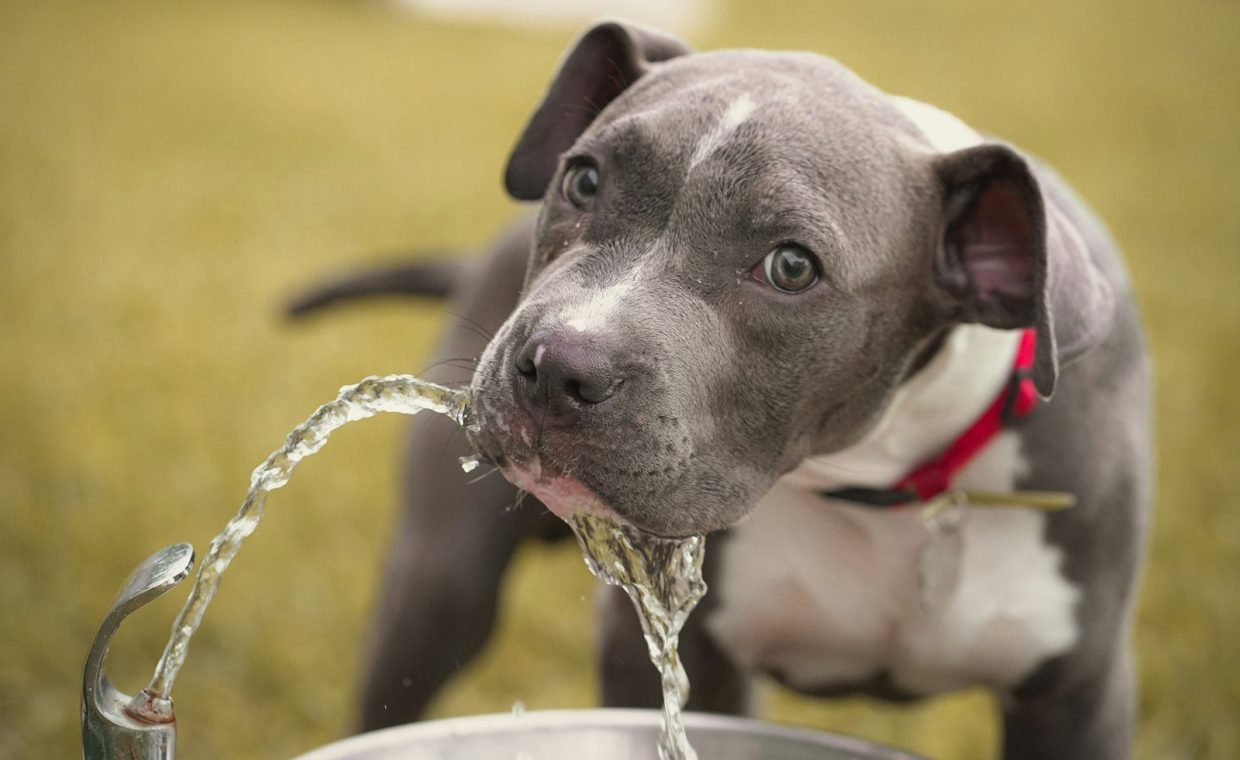
Hydration in summer isn't about one big bowl in the kitchen. It's about access everywhere your dog goes. I keep a bowl on the porch, a collapsible one in the car, and a squeeze bottle clipped to the leash for walks.
Plenty of dogs won't drink enough on their own when they're excited or distracted, so I make the water more appealing. A few ice cubes turn the bowl into a game. Floating a couple pieces of kibble or a low-sodium broth splash gets a stubborn drinker started.
If your dog suddenly drinks far more or far less than usual, or stops drinking altogether in the heat, that's worth a call to your veterinarian. Big shifts in thirst can point to something beyond the weather.
Build shade into every outing
Shade is the cheapest cooling tool you own, and most of us underuse it. Map your walk so it passes tree cover, building shadows, or the shady side of the street. On longer outings I plan a literal shade stop, a spot where we pause for water and let the dog's system catch up.
At home, give your dog a genuine cool retreat. A breezy spot on a tile floor, a fan at dog height, or a damp towel to lie on all work. A raised cot in the shade beats hot ground because air moves underneath it.
One thing I see constantly: owners leaving a dog out in a yard that had morning shade, forgetting that the shade moves with the sun. Check the yard at the hour your dog will actually be in it, not the hour you let them out.
Learn the early signs of overheating
You want to catch heat stress long before it becomes an emergency. Early warning signs are heavy, frantic panting, thick or stringy drool, a bright red tongue and gums, and a dog that lags behind or wants to lie down mid-walk. That's your cue to stop, find shade, and offer water.
The serious signs are different and they move fast: stumbling or a wobbly gait, vomiting or diarrhea, confusion, collapse, or seizures. Heatstroke is a true emergency.
If you see collapse, seizures, repeated vomiting, or trouble breathing, get your dog to shade, offer cool (not ice-cold) water, and contact your veterinarian or the nearest emergency clinic immediately. Don't wait to see if it passes.
Know which dogs need extra caution
Not every dog handles heat the same way, and pretending they do is a common mistake. Flat-faced breeds like Bulldogs and Pugs struggle to pant efficiently, so they overheat sooner. Puppies, senior dogs, overweight dogs, and those with heart or breathing conditions all have a thinner margin.
Puppies especially run hot and tire fast, and they don't know their own limits yet. If you've got a young one, the heat-awareness habits fold neatly into the broader groundwork I cover in the new-puppy mistakes that quietly slow bonding. Teaching a puppy to settle in the shade is as valuable as teaching sit.
For these higher-risk dogs, shrink everything: shorter outings, more water breaks, stricter timing. When in doubt, talk to your vet about what's reasonable for your specific dog's age, weight, and breed.
Keep the day calm so cues still land
Heat makes dogs cranky and distracted, and a distracted dog tunes you out. If your normally responsive dog starts blowing off recall on a hot afternoon, the heat is often the culprit, not stubbornness. It's the same root cause I unpack in the real reasons dogs ignore commands and how to fix it.
So I keep summer training short, early, and rewarding. Five focused minutes in the cool of the morning beats a frustrating half hour in the sun for both of you. Lower the difficulty, raise the value of your treats, and quit while your dog is still winning.
Check the pavement, walk at the cool edges of the day, keep water everywhere, plan your shade, watch for early heat signs, go gentler on at-risk dogs, and keep training short. Stack those and hot days get a lot simpler.
None of this asks you to cancel summer. It asks you to front-load a little planning so the fun parts stay fun. The owners who do this aren't hovering anxiously, they're just a step ahead of the heat.
What temperature is too hot to walk a dog?
There's no single magic number because humidity, sun, and your dog's breed and age all factor in. As a practical guide, be cautious above the mid-80s, and always run the seven-second pavement test first. If the ground is too hot for your hand, it's too hot for paws.
Can I put ice or cold water on my dog to cool them down?
Cool water is good; ice-cold water and ice baths are not, because rapid chilling can cause blood vessels to constrict and slow cooling. Use cool water on the belly, groin, and paws, offer cool water to drink, and for any suspected heatstroke, head to a vet right away.
How can I tell if my dog is just hot or actually in danger?
Normal hot-day behavior is panting that eases with rest, shade, and water. Warning signs that need urgent veterinary care include stumbling, vomiting, confusion, collapse, or seizures. When you're unsure, treat it as serious and call your vet or emergency clinic.
Summer with a dog should be ice cubes on the porch and lazy evening walks, not a low-grade worry humming in the back of your mind. Build the routine once and it runs itself. And when something feels off with your dog's health, your own veterinarian who knows your dog is always the right next call.