
There is a particular look a bored cat gives you at 6 a.m. She sits on the dresser, makes eye contact, and gently pushes your reading glasses toward the edge. It is not malice. It is a hunter with nothing to hunt, running an experiment to see what happens next.
Indoor life keeps cats safe from cars, parasites, and the neighbor's dog, and most of mine have lived long, contented lives because of it. The trade-off is that a four-room apartment asks very little of an animal built to stalk, climb, and problem-solve across a wide territory. When we do not fill that gap, the cat fills it herself, usually at our expense.
None of the ideas below require a big budget or a renovation. Most use things already in your recycling bin, and all of them speak to instincts your cat carries whether or not she has ever set a paw outside.
1. Run a real hunt before each meal
Cats are not grazers by design; they are ambush predators who eat several small kills a day. A wand toy dragged like wounded prey, then "caught" right before dinner, lets your cat complete the whole sequence: stalk, chase, pounce, bite, eat. That full arc is what leaves her satisfied rather than wired.
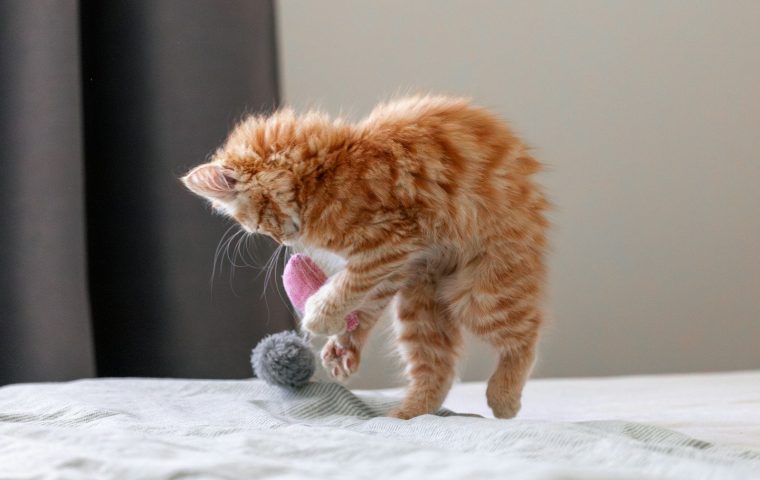
Keep sessions short and intense, around five to ten minutes, and always let her win at the end. A toy she can never catch is a frustration, not a game. I keep the wand tucked out of sight between sessions so it stays novel.
2. Turn dinner into a puzzle
A bowl that surrenders all its food in one quiet face-plant teaches a cat nothing. Food puzzles and slow feeders make her paw, tip, and think, which stretches a thirty-second meal into a satisfying ten-minute project.
You do not need to buy anything fancy. Cut a few holes in an empty toilet-paper tube, fold the ends, and drop kibble inside. Or scatter a portion across a muffin tin with a ball in each cup. Start easy so she succeeds early, then make later versions harder as she gets clever.
If your cat eats wet food, smear a little on a silicone lick mat. The slow licking is calming, occupies her, and doubles as a quiet pre-bedtime ritual.
3. Build vertical territory she can own
Floor space is finite, but the air above it is mostly wasted. Cats read height as safety and status, so a cat who can climb feels like she lives somewhere much larger. A tall tree, a cleared bookshelf, or a few wall shelves arranged like stairs all do the job.
Put at least one perch by a window so she can supervise the street, the birds, and the mail carrier. A sunny ledge is half observation deck, half tanning bed, and it can quietly absorb hours of a cat's day.
4. Give scratching a purpose, not a punishment
Scratching is not vandalism. It is how cats stretch their spine, shed claw sheaths, and stamp their scent on the furniture they consider theirs. Take the outlet away and they do not stop scratching; they simply pick your sofa arm instead.
Offer sturdy posts and angled cardboard in the rooms she actually lives in, especially near where she sleeps and where she likes to dig in. If she has already claimed the couch, my full walkthrough on how to stop a cat from scratching the furniture covers how to redirect her without a single squirt bottle.
5. Rotate toys so the old ones feel new
Leave fifteen toys out at once and within a week they are invisible furniture. Cats habituate fast; a toy that does not move or change stops registering as prey.
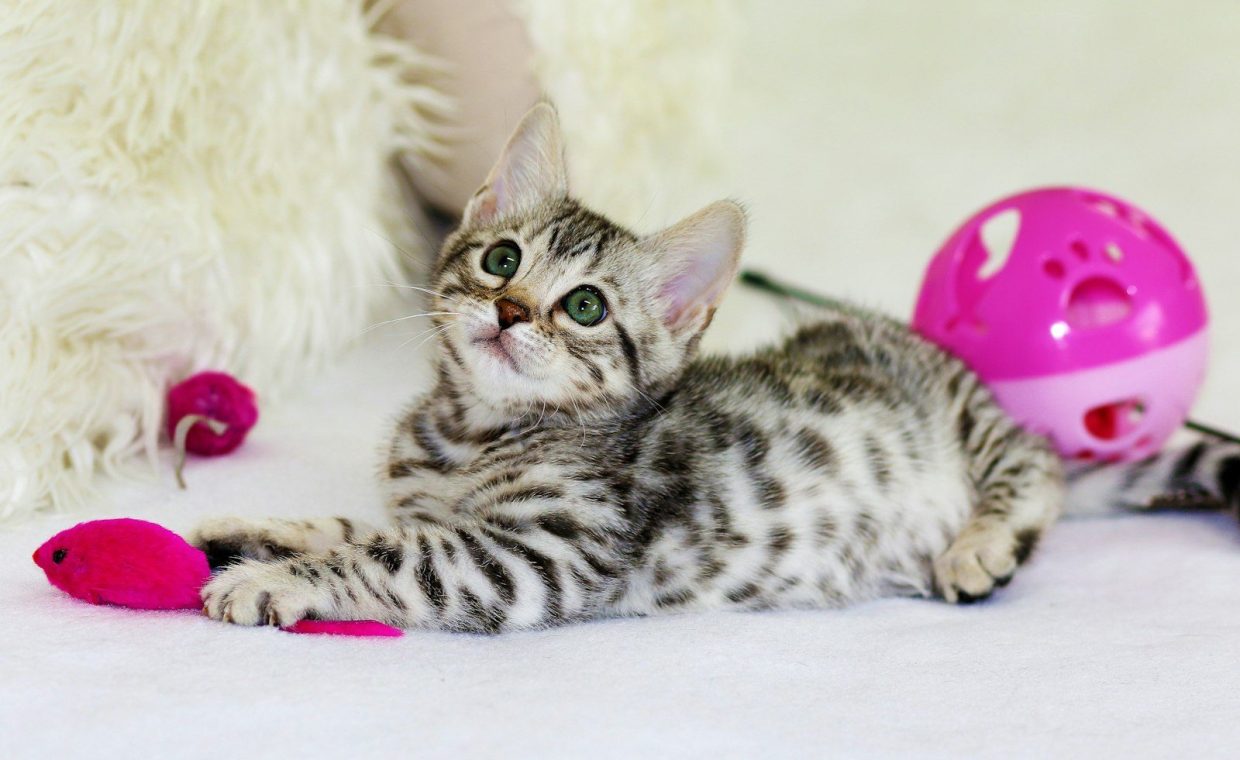
Split the collection into three or four small batches and swap them weekly. The mouse that vanished into a drawer for two weeks comes back out looking, to your cat, like an exciting stranger. It is the cheapest enrichment trick I know, because the toys are ones you already bought.
6. Hide food around the house for a daily foraging hunt
In the wild a cat would cover a lot of ground to find each meal. You can borrow that feeling by hiding a few kibble pieces or treats on perches, behind a table leg, or inside a folded paper bag, then letting her nose them out.
Start with easy, visible spots so she learns the game pays off, then gradually tuck the food into trickier places. A cat working a scent trail across the living room is using her brain in exactly the way her body was designed for, and a tired-from-thinking cat sleeps far better than a bored one.
Boredom in cats often shows up as the very behaviors owners label "bad": overgrooming, picking fights with a housemate, yowling at night, or knocking things off shelves. Enrichment is usually a kinder first answer than scolding.
7. Bring the outside in, safely
Your cat does not need to roam to enjoy the natural world; she needs a front-row seat to it. A window perch aimed at a bird feeder can hold her attention for a remarkable stretch, complete with chattering teeth and twitching tail.
You can also grow a pot of cat grass or set out a sprinkle of dried catnip or silvervine for a short, joyful zoom session. If you want to take it further, a secure window box or a screened catio gives her real air and sun without the dangers of free roaming.
Many common houseplants, including lilies, are toxic to cats, and lilies are especially dangerous. Confirm any plant is cat-safe before it shares a room with her, and if you suspect she ate something toxic, call your vet or an emergency clinic right away.
8. Schedule social time on her terms
Enrichment is not only objects. For many cats, you are the most interesting thing in the home. Predictable pockets of attention, a grooming session, a lap invitation, a few minutes of slow blinking together, anchor her day and lower the low-grade stress of a quiet house.
Brushing is social and practical at once: it spreads skin oils, cuts down hairballs, and tells you early if a lump or sore patch has appeared. A soft brush and a fine comb cover most cats, and my rundown of the grooming tools every owner should own can help you choose without overbuying.
9. Audit the boring corners of her routine
Sometimes enrichment is less about adding fun and more about removing friction. A litter box she dislikes, a water bowl next to the noisy fridge, or a hiding spot that gets disturbed all push a cat toward stress instead of play.
Setup matters more than we assume; even the style of box can shape how comfortable she feels, which is why the covered versus open litter box question is worth thinking through. A cat whose basic needs are calmly met has the bandwidth to actually enjoy everything else on this list.
Hunt before meals, feed through puzzles, build up vertical space, give scratching a real home, rotate toys, hide food to forage, bring the outdoors into view, book gentle social time, and smooth out the boring friction in her day.
You do not need to do all nine tomorrow. Pick two that fit your home, run them for a week, and watch which one makes your cat's eyes go wide. Enrichment is a conversation, and she will tell you, in pushed-off glasses or contented naps, whether you are listening.
How much play does an indoor cat need each day?
Most cats do well with two or three short, focused play sessions a day, roughly ten minutes each, ideally ending in a "catch" and a meal. Kittens and young adults usually want more, while senior cats often prefer gentler, shorter games. Watch your own cat and adjust to her energy.
Can a single indoor cat be happy without another cat?
Yes, many single cats are perfectly content, especially when their day includes hunting-style play, foraging, vertical space, and reliable time with you. A second cat can help some individuals but stresses others, so it is not an automatic fix. If your cat seems anxious or unwell, your veterinarian can help you sort boredom from a medical cause.
My cat ignores every toy I buy. What now?
Try movement and novelty before spending more money. Rotate toys so only a few are out at a time, mimic prey with a wand instead of leaving toys static, and experiment with textures like crinkle, feather, or a simple paper bag. Many "uninterested" cats simply never saw the toy behave like something worth chasing.
Living indoors does not have to mean living small. With a wand toy, a cardboard tube, and a sunny perch, you can hand your cat a day full of things to stalk, climb, and solve. Start with one idea this week, and if anything about her behavior or health worries you, check in with your own vet, who knows her best.