
The first time I noticed my own dog scratching after a bath, I blamed the weather and told myself it was just dry air. It took a flaky patch behind his ears, plus an honest chat with our groomer, before I admitted the real culprit was me, and that most of it sprang from good intentions.
Bathing feels simple enough (wet, lather, rinse, towel) yet a coat that looks dull, feels brittle, or sheds more than usual is often a bathing problem rather than a diet or allergy problem. The skin underneath does a lot of quiet work, and a few careless habits can undo it surprisingly fast.
Here are the seven mistakes I see most often, why each one matters, and the fix I now keep on a sticky note beside the tub.
1. Bathing far too often
This is the big one, and it is almost always done out of love: a dog smells a little "doggy," so out comes the shampoo again. Within a few weeks, the skin's natural oil layer never gets a chance to rebuild.
Why it matters: those oils are the coat's built-in conditioner, so when you strip them weekly you end up with a dry, dull coat, more dandruff, and itchier skin, which ironically makes the dog roll, scratch, and smell even worse.
Most healthy dogs do well with a bath every four to eight weeks, because brushing between baths handles dirt and odor far better than another round of suds. If you are unsure of the right window for your breed and coat, our guide on how often you should really bathe your dog breaks it down by coat type.
2. Reaching for human shampoo
I have done this in a pinch, and I suspect most owners have. The bottle is right there, it smells lovely, and surely shampoo is shampoo. Except that it isn't.
Why it matters: dog skin sits at a different pH than ours, so human shampoo, even the gentle baby kind, can disrupt that balance and leave skin tight, flaky, and prone to irritation over time. Medicated or heavily fragranced human products are worse still.
The fix is straightforward: keep one bottle of basic, dog-specific shampoo on hand and use only that. Look for something labeled gentle or soap-free, skip the strong perfumes, and if your dog has a known skin condition, ask your veterinarian which formula suits them best.
3. Skipping the pre-bath brush
Wet mats are a genuine nightmare, because water tightens loose tangles into dense knots that pull at the skin, and shampoo simply can't reach what it can't get through.
Why it matters: a coat full of mats doesn't rinse cleanly, so trapped product and moisture linger against the skin and cause irritation. You also wind up scrubbing harder, which damages the coat even further.
Always brush thoroughly before the water turns on, working out tangles while the coat is dry and line-brushing in sections for long or double coats. It takes five extra minutes, yet it spares you fifteen minutes of frustration.
4. Using water that's too hot
We run our own showers warm, so it feels kind to do the same for the dog, but what feels pleasant to us is frequently too hot for a dog's skin.
Why it matters: hot water opens and dries the skin quickly, stripping oils even when you use the right shampoo. It can also teach an anxious dog to associate bath time with discomfort, which makes every future bath harder than the last.
Test the water on the inside of your wrist, the way you would for a baby's bottle: it should feel barely warm rather than hot. Cooler water is gentler on the skin barrier and far more comfortable for the dog.
5. Rushing the rinse
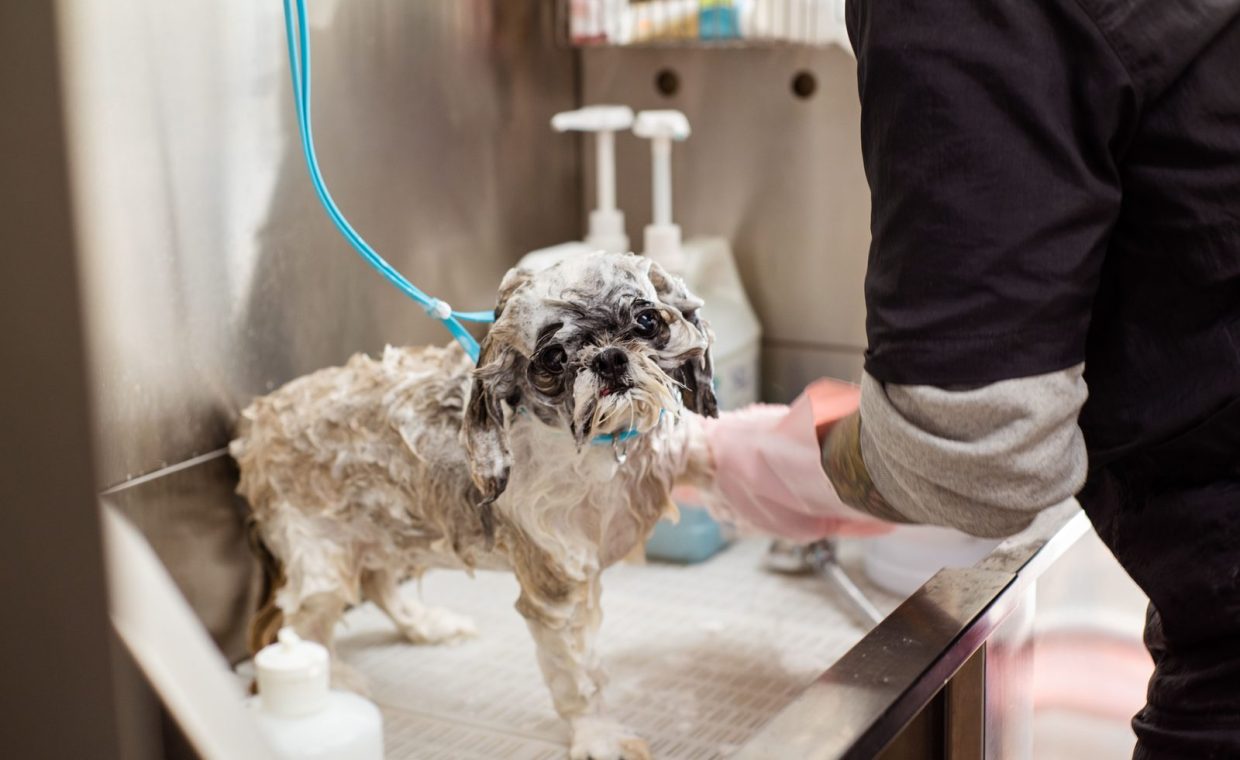
If I had to name the single most damaging habit, this would be it. Leftover shampoo turns invisible once the coat is wet, so it's all too easy to call the job done before it really is.
Why it matters: residue left in the coat keeps working against the skin long after the bath, drawing out moisture and causing that flaky, itchy aftermath I once blamed on dry air. Thick and double coats conceal residue especially well.
Rinse for at least twice as long as you think you need to, running your fingers against the grain near the skin until the water comes away completely clear and the coat feels squeaky rather than slick. Pay extra attention to the belly, armpits, and base of the tail, where stubborn suds love to hide.
6. Drying the coat the wrong way
A vigorous towel rub feels efficient, and a hot dryer feels quick, but both can undo a careful bath in the final two minutes.
Why it matters: rough rubbing roughens the cuticle and tangles the coat, while high heat dries the skin all over again, leaving you with frizz, breakage, and static, the exact opposite of the soft finish you were after.
Blot and squeeze with the towel instead of scrubbing, and if you use a dryer, keep it on a low, cool setting and keep it moving so no single spot overheats. Air drying in a warm room is perfectly fine for many dogs, too.
7. Treating the bath as a fight to win
The last mistake isn't about products at all. When bath time turns stressful, we tend to rush, scrub harder, and skip the gentle steps that protect the coat, and the dog learns to dread the whole ordeal.
Why it matters: a frightened dog tenses, shakes, and bolts, which means a worse rinse, a rougher dry, and a coat that suffers for it. Stress and skin health are far more connected than people expect.
Slow the whole thing down: use a non-slip mat, plenty of treats, and a calm voice, and stop while it's still going well. We rebuilt our entire approach around this idea, and I wrote up exactly how we turned bath time into a calm routine if you want a step-by-step version. A relaxed dog gets a better, gentler bath, full stop.
A simple pre-bath checklist
I keep this short list taped inside the bathroom cabinet, and it has rescued me from every mistake on this page more than once.
- Brush the coat fully before any water.
- One bottle of dog-specific, gentle shampoo only.
- Lukewarm water, tested on your wrist.
- Rinse, then rinse again until the water runs clear.
- Blot dry; low heat or air only.
- Treats out, voice calm, stop while it's going well.
If you like the checklist approach, the same prevention-over-cure thinking applies to plenty of routine pet care; it's the exact logic behind our roundup of litter box mistakes that cause accidents, where small habits make a surprisingly big difference.
Persistent itching, redness, a foul smell, hair loss, or sores aren't a shampoo problem; they're a signal to call your veterinarian. And for any emergency, such as trouble breathing, collapse, seizures, or suspected poisoning, contact a vet or emergency clinic right away.
How often should I actually bathe my dog?
For most healthy dogs, every four to eight weeks is plenty, provided you brush regularly in between. Dogs with skin conditions may need a different schedule, so confirm the right routine with your own veterinarian.
Can I use baby shampoo if I've run out of dog shampoo?
It's wiser to wait than to reach for human products, even gentle baby formulas, because dog skin has a different pH and repeated use can dry and irritate it. Keep a backup bottle of dog shampoo on hand instead.
My dog's coat is still dry after baths. What am I missing?
The usual suspects are over-bathing, water that's too hot, and an incomplete rinse, so stretch out the time between baths, switch to lukewarm water, and rinse twice as long as feels necessary. If dryness or flaking continues, ask your vet to rule out a skin issue.
None of these fixes cost anything, which is the part I treasure most. A longer rinse, cooler water, and a thorough brush beforehand turned my own dog's coat around within a couple of months. Start with whichever mistake sounds most like you, and let your dog's skin do the rest.