
Last spring a friend texted me a photo of her golden retriever mid-bath, suds everywhere, with the caption: "Third time this week, is that too much?" Short answer: probably, yes. But the longer answer is the useful one, because the right bathing schedule for her dog is not the same as the right schedule for my neighbor's wiry little terrier.
I like systems, so I think of bathing the way I think of laundry. There's a default rhythm, and then there are the days something gets muddy, smelly, or itchy and you adjust. Once you know which factors actually move the dial, the decision stops feeling like guesswork.
Let me walk through what genuinely determines how often your dog needs a real, soap-and-water bath, and the signs that tell you to bathe more, less, or call in help.
What "how often" really depends on
There is no single correct number, and any source that gives you one without asking about your dog is skipping the important questions. Frequency is a balance between keeping the coat clean and not stripping the skin of the oils that keep it healthy.
Three things do most of the deciding: coat type, activity level, and skin condition. A short-coated indoor dog who naps on the couch all day lives in a different world from a double-coated dog who swims in the lake every weekend. Most healthy dogs land somewhere between every three weeks and every couple of months.
For a typical healthy dog with no skin issues, a bath every four to eight weeks is a reasonable starting point. Adjust up or down based on the factors below, not on a rigid calendar.
Coat type sets the baseline
Coat is the first lever. It changes how much dirt clings, how oil distributes, and how long a dog can go before looking and smelling like they need a wash.
Short, smooth coats (think Labradors, beagles, boxers) shed dirt easily and usually do fine with a bath every one to two months, plus regular brushing in between. Double coats (huskies, golden retrievers, German shepherds) actually self-regulate fairly well; bathing them too often disrupts that insulating undercoat, so stretch the interval and lean on brushing instead.
Curly and continuously growing coats (poodles, doodles, bichons) trap dirt and dander close to the skin and tend to need more frequent baths, often every three to four weeks, alongside professional trims. Hairless breeds are the outlier: their exposed skin can need weekly gentle cleaning. Brushing, by the way, is not a bath substitute, but it does a lot of the work between baths by lifting loose dirt and spreading natural oils.
An example: same week, two different dogs
Here's how this plays out in practice. Picture two dogs on the same rainy Saturday.
Dog one is a short-haired beagle who rolled in something unspeakable at the park. He gets a bath that night, not because the calendar said so, but because of the event. Dog two is a husky who got rained on during a walk. She gets toweled off and brushed once she's dry, and that's it. Washing her with shampoo would strip her coat for no real benefit.
Same household, same weather, two correct answers. The trigger is the dog in front of you, not a fixed schedule.
Activity and lifestyle move the dial
What your dog does between baths matters as much as their coat. A dog who hikes muddy trails, swims, or works outdoors will simply get dirtier than a dog whose biggest adventure is the backyard.
Swimmers deserve a note here. Chlorine and salt water both leave residue that can dry out skin, so a quick freshwater rinse after swimming is smart even when a full shampoo bath isn't needed. Dogs with seasonal allergies sometimes benefit from more frequent rinsing during pollen season to wash allergens off the coat, something worth raising with your vet if your dog scratches more in spring.
When your dog is dirty but not filthy, a plain lukewarm water rinse often does the job without shampoo. It clears mud and pollen while leaving the protective oils in place: a gentler middle option between "nothing" and "full bath."
Skin and coat health: the myth worth dispelling
The most common myth I hear is that a dog who smells or scratches just needs more baths. Sometimes the opposite is true. Over-bathing is a real cause of dry, flaky, irritated skin, and washing an itchy dog more often can make things worse, not better.
Persistent odor, greasiness, dandruff, hot spots, or constant scratching are signals about skin health, not just cleanliness. A dog using their teeth or paws to relieve itch all day is telling you something a bath won't fix. The same goes for a strong smell coming from the ears rather than the coat. That's a separate issue, and our walkthrough on how to clean your dog's ears safely at home covers the gentle routine that helps, plus when ear odor means it's time to call the vet.
If your dog has ongoing itching, redness, sores, hair loss, or a smell that returns within days of a proper bath, don't just bathe more. These can point to allergies, parasites, or infection that need a real diagnosis. Talk to your veterinarian rather than guessing with shampoos.
A frequency cheat sheet by coat type
Because I find a table easier to scan than paragraphs when I'm actually standing in the bathroom, here's the rough framework I keep in mind. Treat these as starting points, not rules.
| Coat / situation | Typical bath interval | In-between care |
|---|---|---|
| Short, smooth coat | Every 4-8 weeks | Weekly brushing, spot-clean as needed |
| Double coat | Every 8-12 weeks | Frequent brushing, rinse after swims |
| Curly / non-shedding | Every 3-4 weeks | Daily-to-weekly brushing, regular trims |
| Hairless breeds | Often weekly | Gentle skin cleaning, moisturize per vet |
| Active / outdoor dog | As messes happen | Rinse off mud, salt, and chlorine |
| Sensitive or allergic skin | Per vet guidance | Vet-recommended shampoo only |
Bathing well so you can bathe less
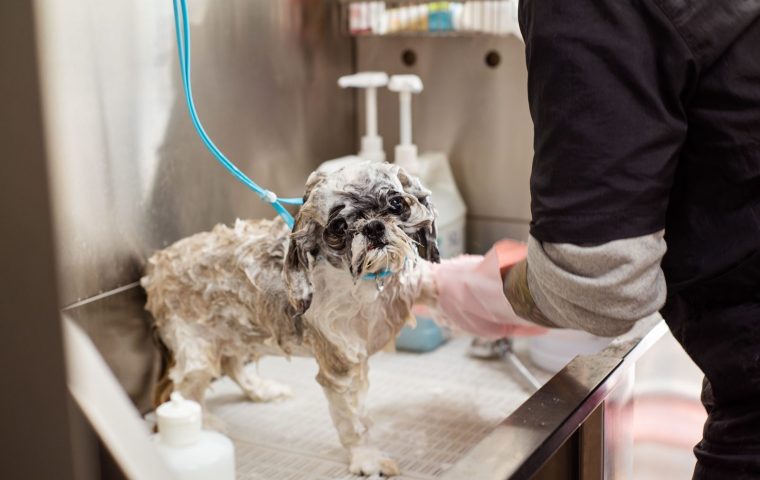
How you bathe affects how often you need to. A good bath that doesn't irritate the skin buys you a longer comfortable interval before the next one.
Use a shampoo made for dogs (human and baby products have the wrong pH for their skin) and lukewarm, not hot, water. Lather gently, rinse longer than you think you need to, because leftover residue is a sneaky cause of itchiness, and dry thoroughly, especially in skin folds and double coats where damp spots can brew problems. If your dog dreads the whole thing, go slow and pair it with treats; calm is part of the goal.
Even with great technique at home, some coats reach a point where DIY isn't enough. Heavy matting, a coat that won't come clean, or a breed that needs structured trims are cues to book a pro, and our rundown of the signs your dog's coat needs professional grooming spells out exactly what to watch for. There's no shame in handing off the hard jobs. I do.
One last reframe, and it's a little tongue-in-cheek: dogs don't share our standards for "clean." Much like the way I once tried to understand why my cat brings me toys at night and slowly accepted it was her logic, not mine, your dog's idea of a good time is often the muddy puddle. Working with their nature, brushing, rinsing, and bathing on a rhythm that suits their coat, beats fighting it.
Is it bad to bathe my dog every week?
For most dogs, weekly bathing is more than they need and can dry out the skin over time. Some hairless breeds and certain medical situations call for it, but a healthy, normal-coated dog usually does better with longer intervals. If you feel the need to wash weekly because of odor or itching, ask your vet what's driving it.
My dog smells bad again two days after a bath. Why?
A smell that returns that fast usually isn't a dirt problem. It can point to a skin infection, an ear issue, allergies, or dental trouble, none of which more shampoo will solve. This is a good reason to schedule a veterinary check rather than rebathing repeatedly.
Can I use my own shampoo if I run out of dog shampoo?
It's best not to. Human shampoos are formulated for a different skin pH and can leave a dog's skin dry and irritated. In a pinch, plain warm water rinses the dirt off without that risk. Then pick up a proper dog shampoo before the next bath.
Bathing isn't a number you set and forget; it's a rhythm you read off your own dog. Match the interval to the coat, adjust for the muddy days, and treat persistent skin or odor problems as a reason to call your veterinarian rather than reach for more soap. Get that balance right and most dogs stay clean, comfortable, and happy with surprisingly little fuss.