
The first time I watched a rescue terrier meet a resident cat, the whole thing lasted four seconds. The dog lunged with joy, the cat became a hissing exclamation point on top of the fridge, and the owner looked at me like she had just ruined two lives. She had not. She had simply skipped the boring part, which is also the part that works.
Cats and dogs are not natural enemies. They are two animals who speak different languages and have very different opinions about eye contact. A wagging tail can read as a threat. Your job is to be the translator who slows everything down.
Done right, this takes a couple of weeks, sometimes a month. Done wrong, it can take a year to undo. So let us do it the calm way, with barriers, scent, and a lot of snacks.
Start Before They Ever See Each Other
The introduction begins with zero contact. Set up a separate room for the newcomer with food, water, a litter box (if it is the cat), a bed, and a closed door between them. This is not cruelty. It is a safe base camp.
Let each animal get comfortable on their own terms first. A cat who is still terrified of the living room is in no state to meet a forty-pound stranger. Give it a few days of quiet routine before you rush anything.
Swap Scents Like It Is a Job
Smell is how both species truly meet. Long before a nose-to-nose moment, they should know each other by scent. Take a soft cloth, rub it gently along the cat's cheeks, then leave it near the dog's bed, and do the reverse.
Watch the reactions. A dog who sniffs the cloth and wanders off is doing beautifully. A cat who hisses at the cloth needs more time, so you slow down and try again tomorrow.
You can also rotate their spaces. Let the dog spend an hour in the yard while the cat explores the dog's usual room, then switch. Both build a mental map of the other one without any pressure.
The Barrier Phase: Seeing Without Touching
Once nobody is reacting to scent, let them see each other through something solid. A baby gate, a screen door, or a cracked door with your foot behind it all work. The point is controlled, interrupted visibility.
Keep the dog on a leash and reward calm behavior with treats. Every time the dog looks at the cat and stays relaxed, that is a click and a snack. You are paying for the exact behavior you want to see forever.
Dogs tell you loudly when they are stressed. Cats whisper. Flattened ears, a low tail, dilated pupils, or a frozen crouch all mean stop. Give the cat a clear exit route to a high shelf or another room, always.
This phase can last several sessions across several days. Short is better than long. Five good minutes beats thirty minutes that end in a meltdown.
Reading the Room: What Each Animal Is Telling You
Body language is the whole game here, and the two species do not match. Learning to read both at a glance is the difference between a smooth introduction and a scramble.
| Signal | In the cat | In the dog |
|---|---|---|
| Relaxed | Loose body, tail up with a soft curl, slow blinks | Soft eyes, loose wag, mouth slightly open |
| Curious but okay | Forward ears, watching, still eating treats | Sniffing air, glancing then looking away |
| Getting tense | Low tail, still body, ears turning sideways | Stiff stance, hard stare, closed mouth |
| Over threshold | Hiss, flat ears, swatting, bolting | Lunging, fixation, whining, barking |
If you want a deeper primer on the canine half of this, the same cues that mean a dog is at ease with the cat overlap heavily with the general signs your dog is happy. A happy, loose dog is a safe dog to keep working with.
First Loose Meetings in the Same Room
When both animals eat, nap, and lounge calmly with the barrier up, you can try shared space. Keep the dog leashed. Let the cat roam free, because a cat who chooses to approach is far calmer than one who feels trapped.
Do not hold the cat and carry it toward the dog. Ever. That takes away the one thing a cat needs most, which is the ability to leave. Let the cat set the distance.
Keep these sessions short and end them while everyone is still relaxed. You want the last memory of each meeting to be a good one. Then you calmly separate them again and try later.
Cats also need vertical space during these meetings. Shelves, cat trees, and the tops of furniture let a cat watch the dog from a spot where it feels untouchable. That safety often lowers the tension faster than anything else you do.
Set up a feeding routine that keeps them apart. Cats like to eat in peace, and a dog vacuuming up cat food is a recipe for a grumpy cat and a sick dog. Feed the cat up high or behind a gate the dog cannot cross.
Baby gates with a small cat-sized gap, or a cat door in a spare room, let the cat retreat whenever it wants. A cat that knows it can always leave is a cat that rarely feels the need to.
When You Are Adding to an Existing Pet Household
Bringing a dog into a home that already has a cat is different from adding a second cat or a second dog, though the patient mindset carries over. If your real project is a multi-cat home, the steps to introduce new cat to current cat lean even harder on scent swapping and slow reveals.
The same is true on the canine side. Owners bringing home a second dog should read up on how to introduce new dog to resident dog, since dog-to-dog dynamics ride on different signals than cat-to-dog ones.
The short version: separate first, swap scents, meet through a barrier, then meet loosely with the dog leashed and the cat free. Reward calm, respect the cat's exits, and never rush to unsupervised time. Two to four weeks of patience beats a year of repair.
What to Do When It Goes Sideways
Sometimes a dog fixates and will not settle, or a cat stays hidden for days. That is a sign to back up a step, not to push forward. Return to the barrier phase and shorten the sessions.
Prey drive is the one thing worth naming honestly. A dog who trembles, whines, and cannot look away from a running cat may have a strong chase instinct, and that pairing needs a professional's eye. This is general guidance, so if you see intense fixation or any injury, loop in a vet or a certified behaviorist rather than pushing on alone.
How long does it take to introduce a cat and dog?
Most pairs need two to four weeks of gradual steps, though some settle faster and some need a couple of months. Let the calmer animal's comfort set the pace, and never rush to unsupervised time.
Should the dog or the cat get the run of the house first?
Give the newcomer a quiet base room, then let the resident pet keep its normal territory. Rotate their access so each learns the other's scent without a face-to-face standoff before either one is ready.
What if my dog just wants to chase the cat?
Keep the dog leashed and reward every calm glance instead of a chase. If the dog fixates, trembles, or cannot disengage even after weeks of slow work, ask a vet or certified behaviorist to assess prey drive before continuing.
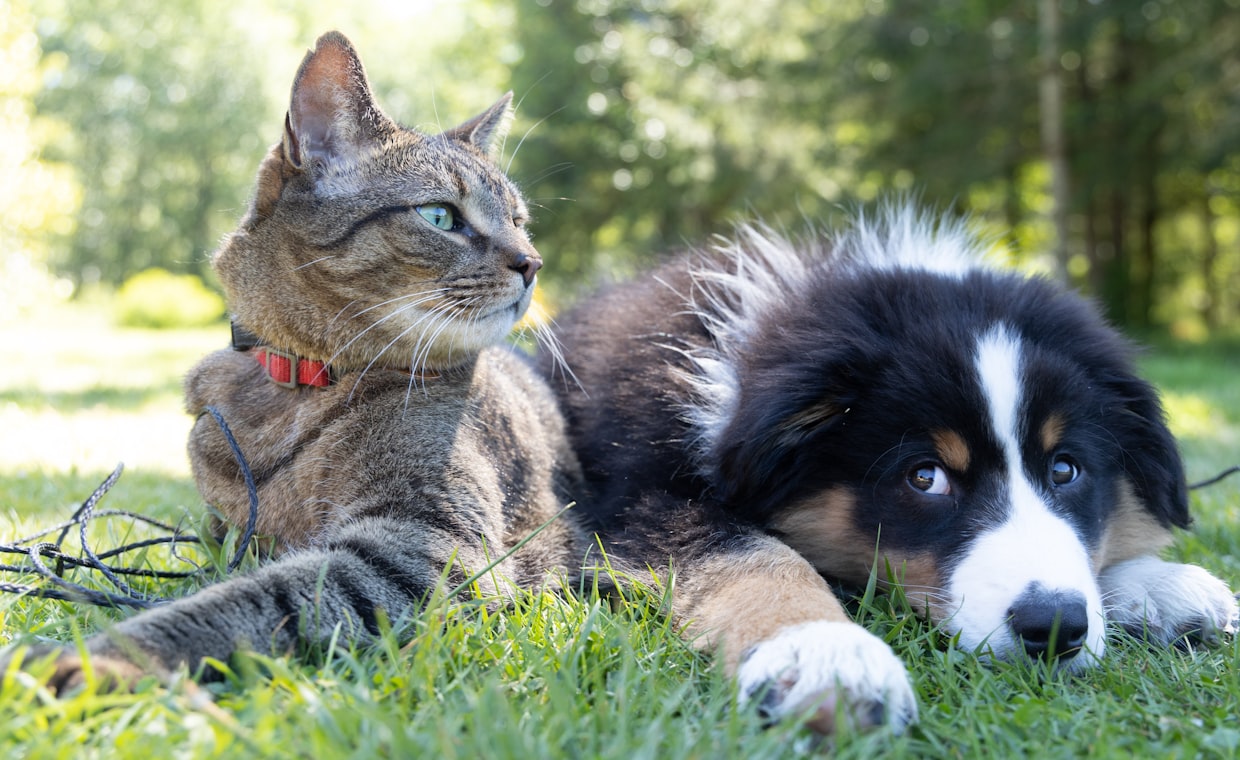
Give yourself grace here, because you are asking two very different animals to share a life. Go slower than feels necessary, celebrate the boring afternoons where nothing happens, and keep those treats handy. One day you will look over and find them napping in the same sunbeam, and you will barely remember the hissing.