
The puppy had been home for nine days when his owner called me, nearly in tears. "He won't come to me. He runs to my husband, he runs to the kids, but with me he just freezes." I asked her to walk me through a normal afternoon, and within about two minutes I heard it: every single interaction she had with that puppy ended in a correction. Not because she was unkind, but because she was anxious, and anxious people manage instead of connect.
Bonding with a puppy isn't a single magic moment. It's the slow accumulation of a thousand tiny experiences where the puppy learns that being near you is safe, predictable, and good. Most owners I meet are doing roughly the right things. They've just picked up a few habits that quietly tell the puppy the opposite.
Here are the six I see most often on the training floor, why each one chips away at trust, and the small adjustment that turns it around.
1. Flooding the first week with visitors and outings
The instinct is sweet: you finally have this little creature and you want the world to meet him. So the neighbors come over, the cousins drop by, and on day three you carry him into a crowded pet store because socialization, right?
Why it costs you. A puppy who is constantly handed to strangers and dropped into loud places never gets the chance to decide that you are his safe base. He's just surviving a flood of input, and the person at the center of the chaos reads as part of the storm.
The fix. Treat the first week or two as a quiet decompression period. Keep the home calm, limit visitors to a few at a time, and let the puppy approach people on his own timeline. Socialization matters enormously, but it works best once he already trusts you. Build the home base first, then expand the world.
2. Correcting more than you connect
This was my crying owner's exact problem. Chewed shoe, "no." Puddle on the floor, "no." Jumped on the couch, scooped off with a frustrated sigh. By the end of the day, the puppy's entire relationship with her was a series of small disappointments.
Why it costs you. Puppies are constantly running an internal tally of which humans predict good things and which predict tension. If you are the person who mostly says no, you become background stress. The bond doesn't break dramatically. It just never forms.
For every correction or "no" in a day, aim for at least five genuinely good moments: a treat, a calm chest scratch, a happy "yes!" when he does anything right. You don't have to count exactly. The point is to tip the ratio firmly toward warmth so that, on balance, you are the human who means good things.
The fix. Catch your puppy being good and reward it out loud. When he lies down on his own, mark it. When he glances at you, smile and toss a treat. Connection isn't the opposite of training; it is training, and it's what makes the harder lessons land later.
3. Skipping the daily rhythm
New puppies thrive on knowing what comes next. When meals, naps, potty breaks, and play happen at wildly different times each day, the puppy lives in a low hum of uncertainty, and uncertain puppies are clingy, mouthy, or shut down.
Why it costs you. Predictability is one of the fastest trust-builders there is. A puppy who knows that you reliably appear with food, a walk, and a play session learns to read you as the dependable center of his day. Chaos, by contrast, makes you just one more unpredictable thing.
The fix. Anchor the day with a loose, repeatable structure: wake, potty, breakfast, nap, short play, and so on. It doesn't need to be a rigid schedule down to the minute. I watched a frantic household completely transform once they did this; the story of how a daily routine calmed our high-energy Border Collie is the clearest example I've ever seen of structure doing the heavy lifting that a hundred commands couldn't.
4. Forcing affection on a puppy who isn't ready
Some puppies are velcro from day one. Plenty aren't. They squirm out of hugs, lean away from face-kisses, and stiffen when you loom over them to pick them up. And a worried owner often responds by holding on tighter, determined to prove how much they love this dog.
Why it costs you. Affection that the puppy can't escape stops feeling like affection and starts feeling like pressure. The harder you push closeness, the more the puppy learns that being near you means losing control of his own body. That is the exact opposite of what bonding requires.
A puppy leaning in, soft eyes, loose wiggly body, and a relaxed mouth is asking for more. A puppy turning his head away, licking his lips, yawning out of context, or showing a stiff freeze is asking for space. Honoring that "no" is what earns you the "yes."
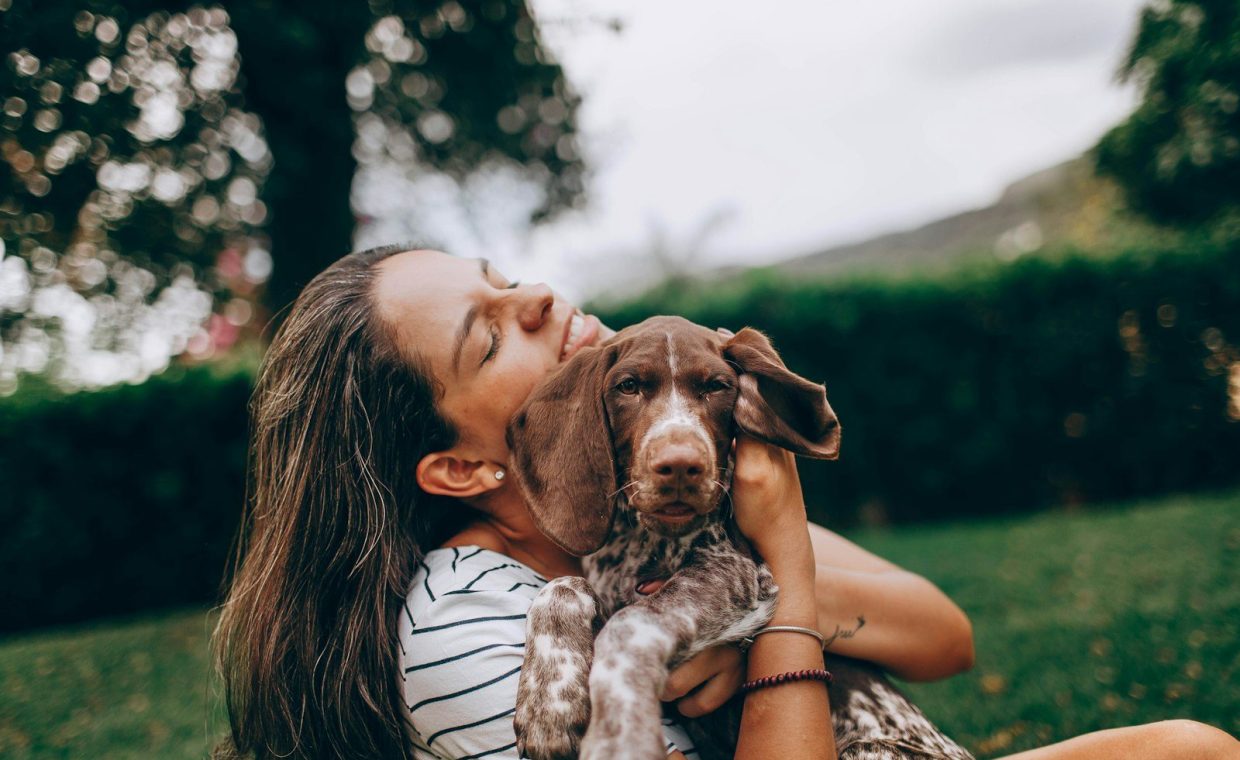
The fix. Let affection be the puppy's choice. Sit on the floor, stay quiet, and reward him for coming to you instead of reaching for him. When you do pick him up, keep it brief and pair it with something pleasant. Counterintuitively, the owners who chase the least tend to end up with the cuddliest dogs.
5. Misreading normal puppy behavior as defiance
Mouthing, the witching-hour zoomies, a puppy who suddenly "ignores" his name, paw-licking after a long walk: owners love to label these as the puppy being stubborn or testing them. I hear "he knows better" about a fourteen-week-old at least once a week.
Why it costs you. When you interpret normal development as personal disrespect, you respond with frustration the puppy can't make sense of. He gets punished for being a baby, the relationship picks up friction, and you miss real signals. Sometimes a behavior you read as attitude is actually discomfort. For instance, constant paw-chewing can have a physical cause, and it's worth understanding why a dog licks its paws and the common causes behind it before assuming it's a behavioral quirk.
The fix. Reframe almost everything in the first few months as "my puppy is learning," not "my puppy is defying." Redirect mouthing to a chew toy, give the zoomies a safe outlet, and keep training sessions short and winnable. And if a behavior seems off rather than just goofy (a sudden change, obvious discomfort, or anything that worries you), check with your own veterinarian rather than chalking it up to personality.
6. Rushing freedom before trust is built
It's tempting to fast-forward to the good stuff: the off-leash hikes, the open back door, the dog who roams the whole house unsupervised. So owners drop the management early, the puppy makes predictable mistakes, and then comes a wave of corrections that sets the bond back weeks.
Why it costs you. Freedom granted before a puppy is ready almost guarantees failure, and failure means more conflict between you. Every time the loose puppy raids the trash or bolts at the park and gets scolded, he learns that the world off-leash is where you turn scary. Trust and reliability are built in small, supervised increments, not handed over all at once.
The fix. Expand privileges gradually and let the puppy earn each one by showing you he's ready. Use baby gates, leashes, and crates as scaffolding, not punishment. When you're weighing the bigger milestones, it helps to know the real signs that a dog is ready for off-leash freedom so you're responding to genuine readiness instead of your own impatience. Done in order, freedom becomes a reward that deepens the bond rather than a gamble that frays it.
How these mistakes stack up
What strikes me, looking at all six together, is how reasonable each one feels in the moment. None of them come from neglect. They come from love expressed slightly out of order: too much, too fast, or aimed at the wrong worry. The reframe is almost always the same: slow down, watch the puppy, and let trust set the pace.
Keep the first weeks calm. Connect far more than you correct. Anchor the day with a loose routine. Let affection be the puppy's choice. Read behavior as learning, not defiance. Hand out freedom gradually. Do those, and the bond tends to take care of itself.
How long does it take to bond with a new puppy?
There's no fixed timeline, but most owners notice a real shift within the first few weeks once a calm routine is in place. Some puppies attach quickly, others warm up over a month or two. Consistency matters far more than speed.
Is my puppy avoiding me because he doesn't like me?
Almost never. Avoidance in a new puppy usually signals overwhelm, too much pressure, or a relationship that's heavy on corrections. Dial back the demands, reward him for choosing to come near you, and the avoidance typically eases. If it's paired with signs of illness, check with your vet.
Should I use treats to bond, or does that just create a beggar?
Food is one of the clearest ways to tell a puppy that you mean good things, and it won't ruin him if you pair treats with praise and gradually fade them as habits form. Use them generously early on, then let your relationship and play carry more of the weight over time.
If you take one thing from all of this, let it be patience with yourself as much as with the puppy. Every owner I've worked with has made at least two of these mistakes, including me with my own dogs. The bond isn't fragile. It's forgiving, and it rewards the small, steady choices you make day after day. Start where you are, adjust one habit this week, and watch what comes back to you.